Showing posts with label 1990's. Show all posts

Friday, January 11, 2013

The Civil War (1990)


Director: Ken Burns

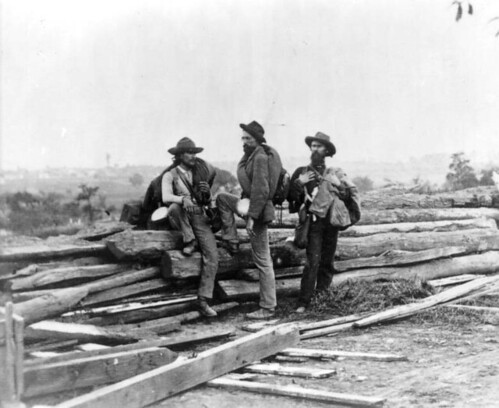
History can be just as compelling as any subject, fact or fiction. Besides the great storytelling that can be inherent in history, there is the bonus of knowing that the story you're watching has certainly happened therefore you can never accuse a story about history of being "unrealistic". When we see the many Civil War anecdotes that Ken Burns tells us during this almost 11 hour long documentary minseries, we don't question their authenticity, we just take in the emotions and ideas expressed through those stories. It makes those stories that much more effective. This expansive and ambitious documentary series is great accomplishment just on the basis of of its scope. We get the history of a grand event that has had a large impact on the world today, and multiple smaller stories that take us into the real America during the Civil War. It's an extensively researched and detailed series that took five years to finish, one year longer than the Civil War itself.

Burns' trademark classical documentary style that has been copied so much now is in full use, but despite the fact that we've seen so much of this "conventional" style in the 20 years after this film, the style rarely inhibits the film. Getting actors to recite letters, or using slow motion zooms on photographs accomplish the goals of Burns. He gets you into the world and connects you emotionally to the soldiers, the politicians, and ordinary people involved through the melancholic and humorous stories told by either the actors or talking head historians (very few appearances by them I must add). The grand scope and long length of the film enable Burns to not just tell the whole story event-by-event of the Civil War from start to finish, but also take many digressions along the way by looking at issues like women in the war, sanitation issues, and pardons for deserters. Not every digression is interesting though, and if I could change one thing it would be to add more about the political issues going on during the war rather than soldier life. Though the film can once in a while seem like a dull moving textbook, we also get somethings that textbooks overlook. These are the smaller stories, the moments and unimportant individuals who lived during this enormous conflict that created, as Abraham Lincoln called it, a new birth of freedom.

Grade: B+

Friday, January 4, 2013

Rosetta (1999)


Directors: Jean-Pierre and Luc Dardenne

 It is a rare and impressive thing when a filmmaker can craft an intimate and personal film while also bringing with it such broad social and political implications. The film is an uncompromising look at a 17-year-old girl who lives in a small trailer with her good-for-nothing mother trying to find a job. She's a girl who is desperate for any sort of job, but she's also a principled human being who just wants to have a normal life. Her desire for a job has to do with money, but it's also about being a normal member of society, and that's what gives this film added poignancy. The Dardenne brothers use their typical handheld jittery up-close camerawork, always following our main character, and frequently in tight close-ups. It gives this deeply personal look at a life in motion even more intimacy, but at the same time it manages to also be about the larger issue of the difficulty that those on the fringes of society have in entering into society.

One of the reasons I will cherish and remember this film for a long time is because it's not an idealistic film like so many others are, it's not a contrarian movie about the ills of society. The film does not take a stance against the idea of modern society, instead it just says that society needs to do more to help those who want to enter modern society. It's a very pragmatic movie and not one with high-minded ideas, and that's a very unique stand to take in intellectual art. Rosetta is essentially a film about the lack of social mobility, and the difficulties people have in obtaining an honest living. It's telling that Rosetta refuses to do any illegal jobs in this film, because she is a person with respect and principles, a quality very deserving of entering society. She does have to engage in a personal betrayal later in the film though, which is not illegal, but certainly only hurts her social life. That betrayal shines a light on the how obtaining even honest work can be a very anti-personal endeavor, because in this economic system personal relationships must be second to money and success. What's more amazing is that none of these messages are said out loud, everything is implied. It's a movie that shows you the life of one person on the fringes of society and forces you to make your own conclusions about why this girl is having so much difficulty. It manages to be political by way of being personal.

Grade: A

Wednesday, December 19, 2012

Happy Together (1997)


Director: Wong Kar-Wai

This is a story of two people who are, contrary to the title, mostly not very happy together. These two men are in what we would call an abusive relationship. They hurt each other and many times can't stand each other, but they simultaneously need each other as well because without each other they become lonely and end up in a downwards spiral. The film presents their relationship in a very brutal and raw way, director Wong Kar-Wai doesn't hold anything back and never refrains from showing us how emotionally abusive, and sometimes physically abusive, this relationship is. But they still come back together and attempt to start over, and that dynamic is a fascinatingly complex one. It sheds a lot of light on why some people either take a long time to leave an abusive relationship or never leave one at all.

As you can imagine, the movie can be extremely depressing at times, in my opinion sometimes even too depressing than it really needs to be. The lack of joy and the constant misery is really what keeps the movie from being great. While I really like what the movie accomplishes, it doesn't quite have enough dynamism to make me feel like this is anything more than just an exceptionally well-made single issue film (mostly a nit-pick). The movie might be called Happy Together but it's anything but happy. But Wong brings energy to the movie via his cinematography and editing which varies quite a lot during the movie, always seemingly mirroring the emotions of the men in the relationship. In the beginning when the two have broken up the film is black-and-white, but later when they decide to start over color comes in and the cinematography becomes more jagged showing the excitement that is renewed in their lives, though excitement doesn't necessarily mean happiness.

Grade: B+

The Lovers on the Bridge (1991)


Director: Leos Carax

I really like this movie, but I think much of that like is based on admiration rather than actually connecting with the film emotionally or even intellectually. I love that this film is a romance between two homeless people, a small subject, but is so ambitious in filmmaking and scope. Director Leos Carax re-built the the oldest and most famous bridge of Paris in a countryside and uses it magnificently. It's obvious his camera angles were never restricted, as he gets all sort of angles, all sort of freedom on this bridge. It's most obvious in a brilliant nighttime sequence on the bicentennial celebration of Bastille Day, complete with fireworks and a wide-range of loud music. But not only does the scope give us the visual spectacle, but also a full fledged romance from the beginning to the end. Carax is given free reign and is never afraid to go all out.

The film is centered on a romance between two odd homeless people: a guy who eats fire and can't sleep without medication (played by Denis Levant, brilliant as always), and a girl who is recently homeless and is going blind (played by the great Juliette Binoche). Both actors make this odd romance work wonders and makes the films celebration of odd love work. Both people live in a brutal world, and only find solace in each other. It's a way to show that love can be a way out of brutality, but Carax is also not afraid to show that love itself can be brutal as well. At least, that's what he's going for. It all works on paper really well, but Carax walks a fine line between his massive scope and the emotionality of the story, and he doesn't always make it across. The movie can be incredibly impressive at times and Carax shows that he is a great filmmaker, but many scenes don't add much at all emotionally. But I found The Lovers on the Bridge to be a magnificent achievement, it's a film about an intimate story made large and epic, and that's what I want to see more of.

Grade: B+

Saturday, October 20, 2012

Chungking Express (1994)


Director: Wong Kar-Wai

When you think of a film from Hong Kong, you usually think of police thrillers, because those are the types of Hong Kong movies that have achieved success all over the world. But in this film, Wong Kar-Wai takes that idea and turns it on its head. He tells two stories that are just barely connected, each about a police officer in the bustling urban jungle of Hong Kong, but the two police never get involved in shootouts and the film isn't some frenetically paced action film. Instead, both stories are existential stories of the difficulties of finding romantic emotional connection in an urban world. Hong Kong is a place that has a dense population in which you'll see a sea of people either way you look, but this film looks at the paradoxical effects that has on finding real emotional connection in such a dense world.

The first story is more of a noir film with a similar tone to Blade Runner complete with existential mysterious characters, but the second film switches it up completely and is more of a screwball romance influenced more by Jean-Luc Godard with its quirky, loveable yet flawed characters and its guerilla-style down and dirty filmmaking. The second story takes more than half the running time and is more satisfying as a whole and really overshadows the first (this would be more of an issue if the first story took up more running time, but it doesn't). The first story establishes the idea of finding connection in a disconnected place, and the second one takes it all the way, creating a full romance that is entertaining but also one that has the characters actually taking action and trying to do something about the dissatisfaction they have (the frequent use of the song "California Dreamin'" in the second story establishes the idea of yearning for a new experience just so well). This is definitely a film I'll be coming back to, the second story is just so visceral and affecting on so many levels, and I feel like I'll see a lot more in that first story when I see this one again.

Grade: A-


Saturday, July 7, 2012

The Last Days of Disco (1998)


Director: Whit Stillman

Whit Stillman doesn't parody, criticize, or even celebrate the WASP/yuppy subculture, he just depicts it. It's an easy subculture to criticize, but Stillman finds a way to sympathize with them while also making statements about society in general. The other great thing that comes with Stillman's familiarity with the subculture is his ability to write some really witty and entertaining dialogue that is so relatable yet so foreign at the same time. Both of these qualities are in full display in The Last Days of Disco, though it is not quite as interesting as his previous two brilliant films Metropolitan and Barcelona.

This film feels a bit more scattered and formless than the last two, and so the emotional power is lessened. But the movie does succeed in not being the exact same as the first two in the sense that while the characters in the movie are yuppie types, the setting is the disco era, and so the culture we see is one that is quite distinct. The movie actually looks at the end of this era, a time of promiscuity and fun. It's a time in which people can break the set of rules at night that they abide by during the day. It's certainly fascinating to see the end of this era, the end of the disco years, and how the difficulties of change affect some of the characters, especially with relationships. The Last Days of Disco is a film about precisely that, the last days of disco.

Grade: B

Wednesday, July 4, 2012

Total Recall (1990)


Director: Paul Verhoeven

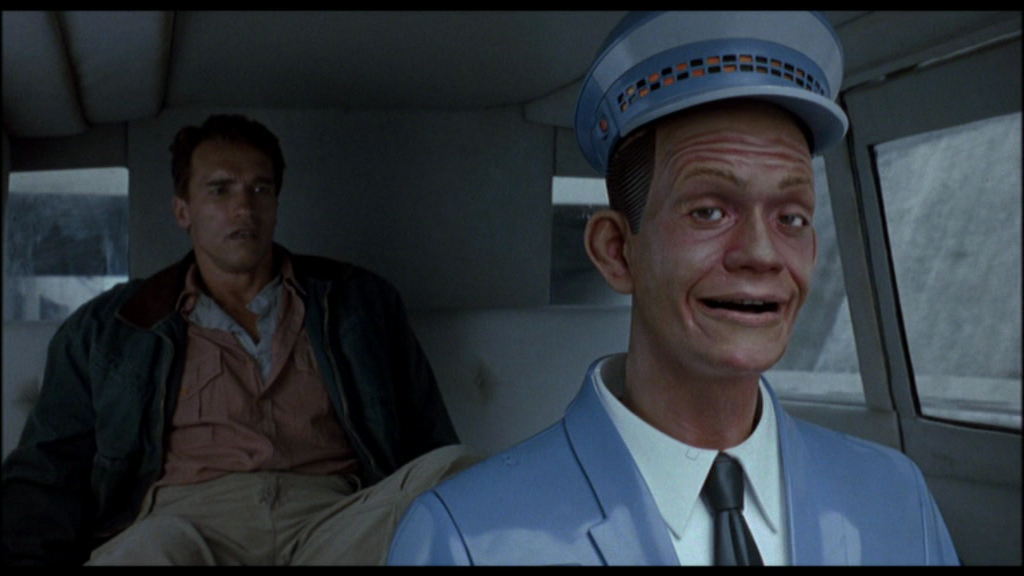
 Though this film was released in 1990, it is clearly a 1980's Hollywood action film. It's got all the cliche's, including horribly cheesy dialogue, gross-out special effects, and Arnold Schwarzenegger. The story is also a fairly standard hero's journey. But the somehow movie still works. This is because the theme of knowing what's real and what is not is never forgotten by the filmmakers, and that's what makes the movie thought-provoking despite all the sub-standard aspects.

Because of just one scene towards the beginning that has our protagonist talking about a fantasy in which he is a government spy who is saving humanity, the studio gets the easily digestible action picture they want, and Paul Verhoeven gets the thought-provoking film that questions the state of reality that he probably wants. Now obviously I prefer the latter, and if the movie fully committed to advancing the reality theme, the movie would have been much better. But regardless, I am positive about this film because of how this type of movie being thought-provoking is usually an unlikely concept. There are still large sections of the movie that are just action movie cliche after action movie cliche, and even if they're not real or whatever, they're still not fun to sit through. But because the filmmakers never forget the point of the story, a movie that could have been unbearable to sit through, becomes worth watching.

Grade: C+ 

Tuesday, June 26, 2012

Malcolm X (1992)


Director: Spike Lee

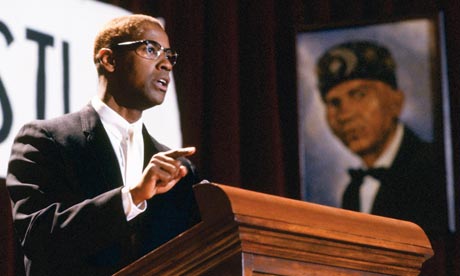
 It's really a compliment to the film Spike Lee made that after watching the movie I had nothing to say about the film itself, and everything to say about Malcolm X. The autobiography that this film is based on is easily one of the best books I have read in my life, and just by virtue of adapting for the screen and actually keeping the essence of the book intact makes this film one of the finest and most flawless biopics of all time. Almost all biopics try to find one thing that defined the life of their subject, but this is impossible to do with Malcolm X because he is a man defined by his progression in life. His views evolved all throughout his life, and were continuing to do so even until he was assassinated.

Lee knows this, and follows him from all throughout his life, giving equal weight to each portion, from the beginning when he was Malcolm Little, to his criminal days when he was Detroit Red, to when he was with the NOI as Minister Malcolm X, till the end when he was El-Hajj Malik El-Shabazz. A filmmaker could easily make a movie about Malcolm X and give a completely inaccurate depiction of the man by just focusing on a certain portion of his life, but Lee gives us the whole picture, and this way we get an honest, truthful, and powerful progression. It is a long movie, running about three and a half hours, but I never thought it was boring and never found any scene unnecessary. Because of Denzel Washington's career-making performance as the man himself, and Lee's real knowledge and respect for the man, we surprisingly have a completely honest film about Malcolm X, one that will hopefully show the world the mans true impact on our world.

Grade: A

Friday, June 1, 2012

Kicking and Screaming (1995)


Director: Noah Baumbach

 As much as I'd like to think that all movies can be either good or bad, I can't ignore the fact that personal experiences and characteristics do affect how one views a film. This movie is one that I think I probably enjoyed much more than others, and this is probably due to my age, my interests, and my experiences. The film has a plot, but it's pretty much insignificant, the real joy is watching the characters interact and experience post-college angst. Because of my age and also my social class I probably connected more to these characters than other people. Most of these people are certainly more wealthy than me, but I'm not completely poor and I think those who are probably had different college and post-college experiences than me and would react differently, the same goes for those who grew up in a completely different time period.

To me, this film wonderfully captures the pains of post-college life. Especially in Eric Stoltz's character, who has been at college for 10 years. The other characters look at him with reverence and disdain at the same time. They are afraid of becoming attached to their college lives like he is, but they also loved those college years when compared to the scary adult world they now have to enter and envy him. Life is scary and difficult and this film captures these characters feelings towards adulthood wonderfully. Part of the movie focuses heavily on relationships as well, and how love changes after college, which is another great point, though the look at that is pretty much surface-level and the movie is not long enough to really get into it. Nevertheless, I think most people would find definite enjoyment in the dialogue, which is endlessly quotable and I don't think you have to be a certain age to enjoy that.

Grade: B+

Monday, May 21, 2012

Insomnia (1997)


Director: Erik Skjoldbjærg

 The film noir genre is known to emphasize shadows and dark imagery and are usually set at nighttime. But in Insomnia the daylight is used just as shadows would be used in a regular noir film. It's a daylight noir that uses light and intense brightness to give us a sense of unease in the story of a detective trying to investigate a murder in a small town up north near the Arctic. There is constant light and that light symbolizes the insomnia and mental breakdown of the detective as he undergoes a downward spiral trying to investigate what should have been a a run-of-the-mill murder investigation.

This is a investigative thriller that does use some of the same things you would expect in movies of this genre, but where it succeeds is its focus on the detective rather than the crime, the victim, or the criminal. It is about the incapacity of the detective to handle himself as he feels guilty and questions his sense of morality after a dangerous decision he makes during the investigation. Unlike the 2002 American remake by Christopher Nolan, there is little sympathy for the lead character, we just watch this descent. While the plot doesn't have much to it, the atmosphere has such an effect that it's all you need to understand and appreciate the film.

Grade: B+


Monday, April 23, 2012

Jakob the Liar (1999)


Director: Peter Kassovitz

 Not long ago I reviewed the original East German film that this one is a remake of. That one surprised me in its subtle complexity, but everything that could have gone wrong with that film do happen in this one. This American remake completely favors a hopeful ending that attempts to show the "power of hope" over everything. While hope is not a bad thing, the film does so in mostly contrived and cliche situations.

The film is much less ambiguous and overly simple. There is nothing in the film that is complex, bad guys are easily noticeable and the good guys are as well. I do like the tone of the film, which is more tragicomic than anything. If it was too overly serious and melodramatic I'm not sure I would have been able to stand it. There's really not much to say about the movie, it just doesn't do anything for anyone. Compared to other films about the subject it doesn't add anything new, and even though Robin Williams can be a funny guy sometimes, this one is not even all that entertaining.

Grade: D+

Saturday, April 14, 2012

Europa Europa (1991)


Director: Agnieszka Holland

 The basic story is quite remarkable, mostly because it's true. A young Jewish boy finds his way into the German army, and while he's young and so that explains why he's so quick to abandon his principles, they do eventually catch up to him. The themes of this story, not movie but story, venture around identity, self-preservation, and violating your mostly deeply held principles in favor of more practical reasons. Though I definitely do not believe this film lived up to those potential themes.

The movie is made in typical Holocaust movie fashion, showing the horrible living conditions and experiences of Jews and making most of the Germans stereotypically evil. But the tone of the film is a bit comedic, mostly because the kid is fairly innocent and so he does not yet know the serious nature of the war. I also must admit that some of the scenes are probably unintentionally light because the lead actor is not all that great, and this is especially true in the end when he is supposed to have learned a great lesson, but there is not much emotional impact. Like many Holocaust movies, this movie is remarkable only because it is based on a true story.

Grade: C+

Friday, March 16, 2012

The Insider (1999)


Director: Michael Mann

 What could easily have been a conventional story about a contemporary social issue, is instead a genuinely powerful drama that looks both at the world we live in and also how the ills of the world affect individuals. The best part about this film is that it starts as a story about the ills of big tobacco, a subject that frankly is not so risky anymore, but it then turns into a story about the far-reaching influence of corporate power and their influence in the media, which is a subject that is far more risky and maybe more important today. The Insider is not a movie that focuses on the story that the whisteblower is revealing, but the whisteblower himself and the issues he must go through to do the whistleblowing.

It's a very relevant film to today in terms of the difficulties of revealing secrets (i.e. Wikileaks and Bradley Manning), but also the reaches of corporate power in the media and how that can affect journalistic ethics. It may not be the most accurate film when it comes to the details of the story, but it is very true in its message. Once again, Michael Mann uses some great filmmaking techniques, like music, great handheld camerawork, and an innate ability to thrill through his camera, to rise above what is largely a fairly conventional structure and story. It's hard to get affected by stories we see everyday, but Mann has this ability to infuse conventional stories with a real and powerful emotion.

Grade: A-

Monday, March 12, 2012

Heat (1995)


Director: Michael Mann

Auteur cinema in Hollywood is incredibly rare, especially today when Hollywood is just focused on movies with $200 million budgets. With budgets that size, the studio will be very involved, and film becomes nothing but a business. But there are a couple of directors I can think of that succeed in retaining their artistic integrity and still operating within the major studios of Hollywood. One of them is Martin Scorsese, and the other is Michael Mann (Steven Spielberg might be one too but I'm not so sure). Arguably Mann's most famous film, Heat, is a great example of just that.

Mann created an epic crime film that takes the conventional tropes of the police-crime drama and adds real meaning and emotions into it. He's not only great at taking those conventions and making them really effective (like the shootout), but he addresses them by having the characters realize the inevitability of their situations, both professional and most of all personal. Both Al Pacino's police character and Robert De Niro's criminal character know who they are in this game and what role they play, it's nothing new to them. Both are completely aware of the consequences of their work on their own lives. Mann also maintains a brilliant control of tone and direction that uses the music, the lighting, the sound, and the editing to emphasize the highly personal and fairly existential nature of this epic city-spanning movie. When it comes Hollywood genre filmmaking, nothing comes close.

Grade: A-

Saturday, January 21, 2012

Filmcap: The week of Dec 4-11


Raise the Red Lantern. Certified Copy, and Sideways are some of the films reviewed this week. I continue my catch up on 2011 films and I find one true masterpiece as well as two interesting but a bit standard works. In addition, I check out two films by renowned directors, one American and one Chinese, both with new films out this year. In this post you'll find films about second chances, coming together in the face of hardship, and why authenticity may not matter. 

Tuesday, January 10, 2012

Filmcap: The week of Nov 13-20


Kiarostami's Taste of Cherry and Scorsese's New York, New York both feature in this post that also includes a Thai movie with a very long name by a director who also has a very long name. In this post you will read about Scorsese's epic experiment, the similarities between the movies of Marvel Studios, and how a movie that makes very little sense can still be completely magical. 

Tuesday, January 3, 2012

Filmcap: The week of Nov 6-13


Breathless, Breaking the Waves, and All About My Mother are some of the movies from this week. The first two are masterpieces and if you read the reviews of those films will have you read about why the famous jump cuts in Breathless actually add to the subtext of the movie and why Breaking the Waves is one of the best examples of an great ambitious film done on a small budget while also featuring one of the best performances of all time. Also in this post is what I believe to be two of the most under-appreciated films of 2011. 

Friday, December 30, 2011

Filmcap: The week of Oct 30-Nov 6


La Haine, and the first season of The Wire make up the whole of this short post. It's pure coincidence that this post has a sociopolitical theme in which the crummy lives of the poor and how the police respond to that are examined. One is set in France and the other in Baltimore, USA. Two entirely unique locales, but both reveal that the lower classes and minority races are very marginalized in society. Both La Haine and The Wire reveal a bit about the other. La Haine is helped by The Wire because the side of the police is not addressed with as much importance as it is in The Wire, and so it helps to understand the police and the problems they have themselves. The Wire is aided by La Haine in the sense that it gives the The Wire a more international perspective instead of the show being purely about America. La Haine shows that the problems of urban life in Baltimore displayed in The Wire are not just exclusive to America. Anyways, both of these are pretty important and I highly recommend both. 

Tuesday, December 20, 2011

Filmcap: The week of Oct 23-30


Don't Look Now, Hoop Dreams, and Morvern Callar are some of the highlights from this productive week of movie watching. In this post you'll two "adaptations" of classic novels by two very different authors, two mesmerizing movies about the different ways people deal with grief, and also a movie with a typewriter that is a bug. Many more reviews of 2011 movies that I'm catching up with coming in the coming posts. Now that it is winter break I hope to catch up a bit with these posts. Also, the movie posters for the movies this week are all pretty good (except for the In Time one).

Tuesday, November 22, 2011

Filmcap: The week of Oct 2-9


Bunuel's The Discreet Charm of the Bourgeoisie, von Trier's Europa, and the final season of Deadwood all feature in this post. Yes it's been a long while since my last one, and I am good awfully behind, but I am determined to keep it going. Quite a large variety of stuff in this one. It includes a couple of television documentaries about history and also the culmination of a series that almost serves as the history of society. The Deadwood post is possibly the longest in this blogs history, maybe being second only to The Tree of Life post.