Showing posts with label Grade A TV seasons. Show all posts

Friday, January 4, 2013

The Wire: Season Five (2008)


Creator: David Simon

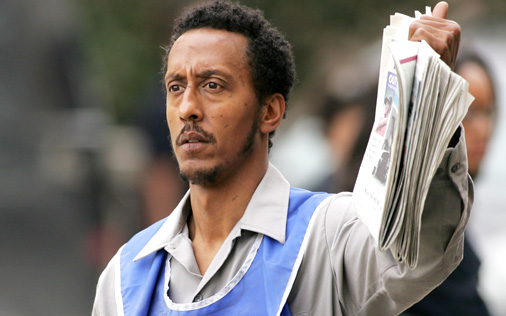
Lets get this out of the way first, if I had to rank each season of The Wire I would pick season four as the best and season five as the worst. But even the worst season of this show is better than almost anything on television right now. That just goes to show how great this series is, and why it's justified when people say that this show is the best ever. This final season had a few goals. The first was to bring in the institution of journalism in the world of The Wire, a profession that creator David Simon knows a whole lot about since he was a Baltimore Sun reporter before he started the show. The media is an appropriate focus for the shows final season because the media is the middleman between the people and the governmental institutions and what keeps the people from knowing about the failures of those institutions. Simon shows us why the media is as guilty as all those other institutions when it comes to the question of why nothing ever changes. The media is just another cog in the machine, being oiled by the same forces of surface-level achievement and personal success.

The second thing the season did was to give us another Hamsterdam-like solution and then shoot it down. This time we see that even when we have good people in office, getting resources to where they belong can be difficult, and so we observe what kind of drastic things need to happen in order for those resources to come. We see McNulty invent a ridiculous fake serial killer in Baltimore, but it's quite tragic how serious he needs to make it and how he needs to sacrifice his whole career in order to get the resources to fix the real problems. That reflects a theme that The Wire has advanced over and over again: The individual gets devoured by the institution. Doesn't matter if the individual does the right thing or the wrong thing, they will get devoured. It all also ties into the lies that fund all of these institutions. The newspaper gets a chance to win Pulitzer's because of a reporters exaggerations and lies the same way the police department exaggerates stats to fake success and maintain funding. The third and final thing this season does was to meticulously craft and conclude the stories of all these characters in a way that ends in mostly the same way it all started. That's the conclusion that Simon wants and that's what he shows. Despite all the strong idealistic individuals, everything is cyclical, and everything stays the same. The game is the game, and the game will always stay the game.

Grade: A

Wednesday, December 5, 2012

Louie: Season Three (2012)


Creator: Louis CK

 Last season, Louis CK gave us what I saw as of the best seasons of TV I had ever seen. It was completely atypical of any show that had ever aired in not only form, but also content. The show encapsulated the human condition better than any show that year. So it's pretty high praise when I say that the third season completely met my very high expectations. At the most basic level, it's a show about a man in a mid-life crisis, but that description really doesn't do the show justice. Louie is a man who takes care of his kids half the week, but he is searching for something to focus his attention in that other half of the week. This season he looks at many things to fill the void he has in his life. He comes across many women who he attempts to court, he finds a new career goal to strive towards, and even tries to make a new Cuban best friend.

In typical Louie fashion, he's not too successful with those endeavors, but it's the journey that is so touching and so affecting. As a director and writer, Louis CK is able to capture the most complicated of human emotions and feelings. He has a talent that outshines most Hollywood filmmakers. A great example of this is when Louie goes to meet his father for the first time in many years. This is a show about what Louie is feeling, so appropriately the audience views reality through Louie's eyes, and so when he is in on his way to meet his dad there is tug-of-war going on his head and Louie actualizes that brilliantly on screen through surreal moments that bend reality for the sake of Louie's inner feelings. The ultimate highlight of the season is most certainly the "Late Night" arc, when Louie gets the chance to replace David Letterman. Those episodes (which are really one big movie) not only provide a commentary on the vicious way show business makes enemies out of friends, but also give us as a "Rocky"-like arc for Louie that should have been cliche, but somehow managed to be genuinely triumphant while still keeping the downer tone and ideology of the show intact.

There were moments of the season that were certainly not as creative and ambitious as Louis CK's best work, but any show with the vignette structure will have its low points. Louie counterbalances those low points with some extraordinary high points, all capped by the amazing transcendental season finale in which Louie literally gets away from it all and goes to China. What did he do there? Nothing really. But it felt completely right, and that's what Louie is about: feeling right.

Grade: A

Friday, September 14, 2012

The Wire: Season Four (2006)


Creator: David Simon

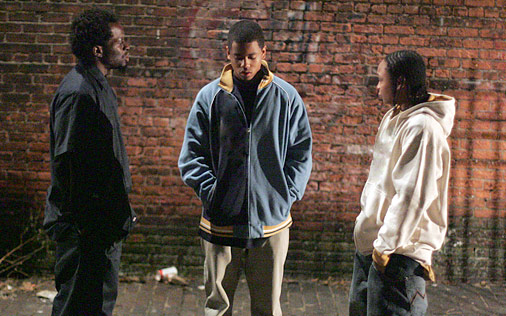
 After three seasons in which the scope of the urban American problem was expanded each season, the fourth season of The Wire takes a few steps back and shows us the root of the problem. It all begins with the children on the street. Maybe you were wondering what all the gangsters on the street did wrong as kids to get into this situation. Why did they end up on the corner with drugs and a gun? And why can't one of these kids just focus, go to college, and make a life for himself? Well here is your answer. These kids are smart, clever, good-hearted, and innocent, but the environment they live in draws them into the harmful sludge of urban society. It's not even that these specific kids were at the wrong place at the wrong time, because the thing is, every kid in their neighborhood is in the wrong place at the wrong time. The fates of these children were planned since the day they were born.

The season follows four kids, all of whom take very different paths that seem to end up in places not too far from each other. They all display a potential to do something, to be something more. But if you've seen The Wire you know not to expect a happy ending where one of the kids from the ghetto grows up to be that astronaut he always wanted to be. But the show doesn't shy away from showing success, we see a relative win with the fate of one of the kids. But even then, we see how the system makes that success so much harder than it needs to be. The ending of this season will have you in tears, and it won't be because of some kid having a cathartic breakdown or someone dying, it will be because of the overwhelming sensation that comes over you in which your emotions finally take in the realization about how messed up everything is. It's a feeling that I've honestly never had before watch any TV show or movie. I've never felt a grander sense of tragedy than I did when I finished season four of The Wire. This is why that out of all the great seasons of The Wire, this season is the greatest.

Grade: A

Thursday, September 6, 2012

Mad Men: Season Five (2012)


Creator: Matthew Weiner

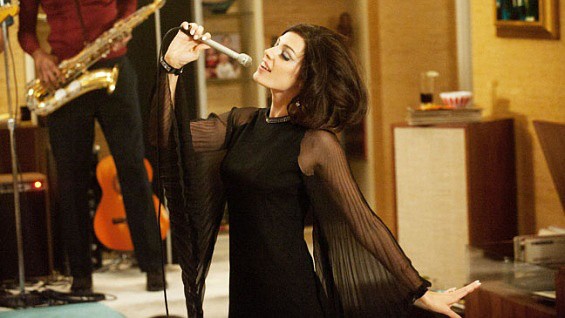
 The 1960's are famous for having been the era of great social change, and Mad Men has been well aware of this during its run, but we haven't seen it manifest itself completely. Up till the fourth season it was mostly hints of what was to come. But now that we're in the second half of the 1960's we're seeing a lot more of the actual social change and seeing how it is affecting both the young and old characters. This season takes on this divide between the young and old workers head-on. The first half of the season is about the old making way for the new. We see people like Don Draper and Roger Sterling struggling to keep up with society's new trends, something that's pretty important to their jobs. The second half of the season we see their responses to that struggle, which ends up being denial. They have an increased ambition to keep up with the younger people and try to get back what they once had.

For the main character, Don Draper, we see this not only in his professional life, but his personal life as well. The beginning is the best of times for Don. He gets rejuvenated when he starts a new firm, a new account, a new family. But once that beginning ends, the dissatisfaction comes back, and a search for a new beginning begins once again. This season shows us the negative consequences that come with ambition, which is a constant sense of dissatisfaction. Mad Men goes deep into the human psyche like no other show has done before, and it does so in a sophisticated, artful, and subtle way. The show has created such complicated characters in a world that is so much like our own that makes it so easy to react to even the smallest of changes or events in their lives because we know exactly what they're going through. This is because Mad Men is a show about one of the most universal things there is, the endless pursuit of happiness. And what is Don's definition of happiness? "It's the moment before you need more happiness."

Grade: A


Monday, June 11, 2012

The Wire: Season Three (2004)


Showrunner: David Simon

The Great American Tragedy. That is what The Wire is about. The seasons of the show I have seen so far have all expanded the scope of the show and evolved it into not just a show about cops and crooks, but a show about all the reasons urban America, and by extension America and maybe even Western civilization in general, are in decline. The third season the scope expands up into the political world and into the dealings of the most high up in Batlimore. It is used to comment on the tragic fact that how the higher up you go in the system, the more difficult it is to reform the system. The main theme of the season happens to be reform, and how difficult it is. The first two seasons laid out the problem very well, and then this season shows the potential solutions to those problems but how implementing those solutions are not so simple.

We see attempted reforms on both the police side and on the drug side, and how in both systems the traditionalists and a variety of external societal factors inhibit the reformers from successfully implementing those reforms. The "hamsterdam" plot, in which a lieutenant creates an area of the city in which there will be no drug enforcement is a brilliant story-line. That whole plot is policy analysis at its finest, examining the factors and repercussions of realistically implementing such a policy, and what needs to be done in order to actually have it succeed. Ultimately it's a tragic story-line because it's a great idea, but the climate of modern society doesn't allow it. But the true brilliance of The Wire lies in the fact that everyone is in a gray area, even those who are trying to do right in the world. Even those who genuinely want to right the wrongs of the world are shown the negative consequences on their colleagues and their boss' when they go against authority trying to do the right thing. Once again, just like all prior seasons, we see the complex nature of the world in all is ugly glory.

Grade: A

Friday, February 17, 2012

The Wire: Season Two (2003)


Executive Producer/Showrunner: David Simon

The second season of this landmark show does something I have never seen in a television drama before. After a successful, critically acclaimed, first season that is heavily serialized, the show starts the second season with a completely new story. We revisit some of the main characters, but we are introduced to a brand new story-line in the Baltimore shipping yard with many new characters. But this decision ends up being not just bearable, but brilliant. The first season was about the poverty-stricken predominantly black drug-dealing lower class of Baltimore, but this second season expands by showing how the urban decay effects not just those on the bottom, but also white blue collar workers as well.

The show builds and expands on that first season in a very brave way. Eventually many of our main characters and format of the first season comes into play, but that takes a lot of time to happen. Like the first season, the season takes time to get everything into place, but by the end of the season everything feels completely perfect. The blue collar members of the working class are the ones that have it hard this season, and in a genius move, their connection to the drug trade in the first season is made very clear at the end.

The second season is almost a Godfather-like sequel to the first, in that the first season is a great piece of art in its own right, and the second one expands on the first season and almost equals it. Once again, David Simon created a crime show that actually focuses on the reasons for the crime. When the jobs for the working class go away to other countries, or when their jobs are replaced by technology, where will those workers go? If the only place hiring is the local gangster, they'll do anything to feed and house their families.

Grade: A