I decided to start this so I can practice my movie writing skills. It will usually be recap of the films I watched in the past week, so basically, a Filmcap.

The Fighter (David O. Russell, 2010): I found this to be really heartfelt and entertaining drama about family dynamics. It has some issues with where the emotional focus is and where the movie focuses. Christian Bale's character, Dicky Eklund is more compelling than Mickey Ward and because Mickey has more screen-time that distinction is even more noticeable. I also thought the soundtrack was a missed opportunity. It used a lot of famous songs that come with pre-conceived associated feelings. The movie could have done better in picking songs that would accentuate the emotion in the film instead of using the emotions we have associated with the songs. But the movie's a refreshingly unpredictable sports movie that's very funny and feels very real, a lot of that in part to Christian Bale's performance, easily one of the best of the year.
Grade: B

The King's Speech (Tom Hooper, 2010): This one impressed me a lot because the story could have been done in a really cheesy and predictable way, but the movie ended up being actually legitimately emotional and exciting. A large part of that is because of how invested the movie gets us in Bertie's life. In getting to know his situation and character the speech impediment he has becomes much more than just embarrassing, the stakes are more emotional. One of my favorite things about the movie was also the visuals. Tom Hooper seems to be really great at blocking and composing images in the frame. Every frame looks like a professional photograph because of the set direction and especially where everything is placed. There's also a really cool fish-eye lens thing he does once in a while which gets us real close to the characters.
Grade: A-

F For Fake (Orson Welles, 1973): This is a really unique documentary/video essay that raises some really interesting questions about the authenticity of art and the overall nature of art. Orson Welles makes the movie in an incredibly unique way, he uses reenactments, interview footage, and short fictional segments to tell the story. Sometimes it's hard to make sense of what's happening because the editing is so fast and insane. This is a film that is definitely built because of the editing. A few times he intercuts footage of two separate interviews to create a fascinating narrative. Welles himself even is sitting in an editing room when he's narrating the movie. Even if you can't handle the weirdness of the movie, you won't forget it.
Grade: B+

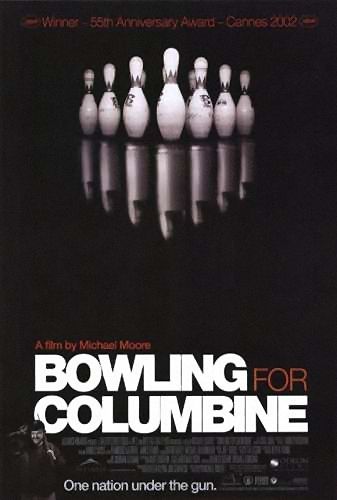
Bowling For Columbine (Michael Moore, 2002): Michael Moore is a guy with big ideas, and a lot of them. He seems like a genuine person who wants to make the country a better place, and I respect him for that, but that doesn't mean he's perfect. I think this movie is one of his most interesting ones and it raises a lot of great points. I liked that he focused on the violent nature of America, and didn't necessarily say it's because we have so many guns. While he asked great questions and raised really good points about our violent nature and gun control, he didn't necessarily give me any lasting answers. He made me ponder about a lot of these issues and I do consider that an achievement, but the film is not necessarily the cure for our ills. Though I don't know if Moore wanted to singlehandedly cure us, he knows he probably can't, so I think he's happy that a lot of people watched the film and started thinking about the issues.
Grade: B

Marie Antoinette (Sofia Coppola, 2006): I felt the goals of this film were to create a stylish, familiar-yet-unfamiliar world while showing the real issues Marie Antoinette went through and debunk many of the misconceptions about her. I feel like the film succeeded with those things. It's definitely a stylish film that is a joy to watch and behold. All the production values are very impressive. It's very unique in the sense that it tries to be historically accurate in terms of the sets and costumes but not the dialogue or acting. That decision did not bother me, I was taken aback by some of the music when watching it, but after it's all said and done the films overall message is what stayed with me and the music, acting and dialogue helped that message. One of the only real flaws with this film is the handling of the politics. There has to be politics in this story, but the way Coppola did the film was very apolitical and so when the political decisions come around the effect they have aren't great. I've seen every film Coppola has done except her new one, "Somewhere," and I've been extremely impressed with her sense of style. Even with this imperfect film, she's turned into one of favorite filmmakers working today.
Grade: B+

Mother (Bong Joon Ho, 2010): This very personal murder mystery is brilliantly crafted in the sense that it plays with your expectations and keeps you captivated. Like a woman, it leads you on and when you think you've figured it out it then suddenly goes in another direction and does it all over again. The conclusion does not disappoint and is really well done. If you're looking for an entertaining, captivating, and personal murder mystery this is a great choice. Kim Jye Ha, who plays the mother character is also very impressive in this film, always convincing, even when she does some very surprising things you wouldn't think an old lady like her would do, but then that's exactly what this movie is about, a mother doing anything she can to save her son.
Grade: B+

Shutter Island (Martin Scorsese, 2010): I watched this back when it came to theaters and I liked it a good amount and was curious to see how it would hold up to a second viewing. Someone told me the movie was worse the second time, and then I also heard it was better. After seeing it a second time, I can say that Shutter Island was definitely even better the second time. Once you know the actual plot the film becomes something more than just a plot-based thriller. It becomes an intense psychological character study of a deeply disturbed but very interesting character. I still think this is Scorsese doing a B-movie, but a B-movie directed by one of the greatest directors of all time is still going to be pretty damn good. Scorsese did everything he could with this plot, including infusing it with a creepy atmosphere highlighted by the awesome Kubrickian music choices.
Grade: A-

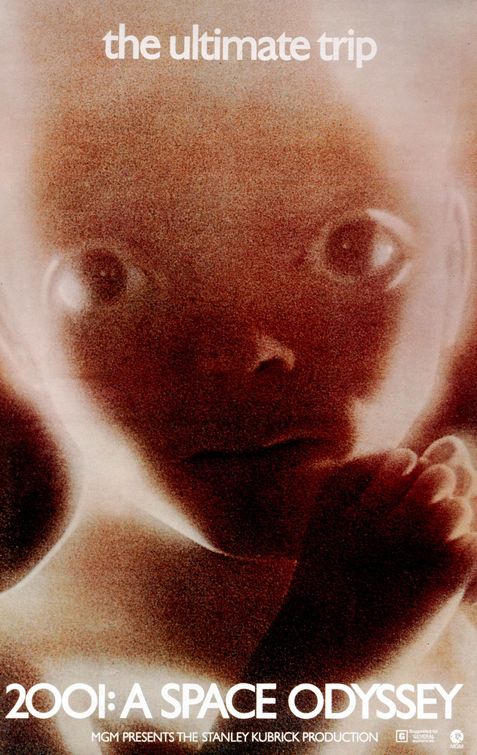
2001: A Space Odyssey (Stanley Kubrick, 1968): Speaking of Kubrickian, here is Stanley Kubrick's best film. I don't think I can add a whole lot into the conversation about this film, but I think it's worth pointing out that more than 40 years later this film is still one of the most unique films in cinema history. I think most of that is due to the fact that no one can really replicate what Kubrick did without copying what he exactly did. Certainly many films have been influenced by "2001", the music of "Shutter Island" and the beginning of "There Will Be Blood" being recent examples, but none have really taken the approach to science fiction 2001 has. Darren Aronofsky's "The Fountain" is the lone film that tried and more or less succeeded in making science fiction that's not just tech-based, otherwise the only film that I can compare to "2001" is Andrei Tarkovsky's "Solaris." I'm looking forward to Terrence Malick's "The Tree of Life" because from the little information I have about it, I get a very 2001 vibe to it in terms of the big ideas it seems to be playing with and certainly the imagery in the trailer. It's been hard to keep my expectations low for that movie. In regards to "2001," I believe this is my third start to finish viewing of the movie and it's simply one of the finest achievements in cinematic history and quite easily the best science fiction film and one of my favorite films of all time. If I was forced via waterboarding to name my single favorite film of all time, there's a good chance I would say "2001."
Grade: A (there is no such thing as an "A+" in my gradebook)