Showing posts with label 2010's. Show all posts

Wednesday, February 6, 2013

Haywire (2012)


Director: Steven Soderbergh

As written this film is basically your average Euro spy thriller. A clandestine spy does jobs in major European cities, one of them goes wrong and there's a bit of mystery as to her employers intention and eventually some revenge comes into play. It's all pretty generic stuff. But in comes Steven Soderbergh, whose filmmaking expertise can do wonders with any story. This film basically is a how-to guide when it comes to shooting action movies. His directing stands out in every scene. The action scenes are filmed with authenticity and are not afraid to show off the stunningly choreographed action set pieces. He does not create the fight scenes in the editing bay like so many other Hollywood action movies do nowadays, he utilizes the set and uses wide shots to make sure every blow feels real.

A big reason as to why the fight scenes feel real and authentic is due to Soderbergh's casting of former MMA fighter Gina Carano as the lead character. She knows how to fight, and Soderbergh lets her strut her skills on camera with no manipulation. On top of her great fight choreography, she serves her character well with her quiet and mysterious performance. While the film is filled with great visuals and refreshing fight scenes, and the film is unabashedly more style than substance, the lack of substance is still what keeps the movie from being a truly great film. It's a masterclass on creating a good genre picture but that means it's still a genre picture with not a whole lot of lasting significance. But at the same time Soderbergh did not try to create a masterpiece. Soderbergh's great blocking, cinematography, editing, pacing, music, and sound once again shows that he is a master of filmmaking craft.

Grade: B

Wednesday, January 23, 2013

Holy Motors (2012)


Director: Leos Carax

 It is not too difficult to appreciate this film, or to admire this film, or to enjoy this film, but understanding what it all means it is a different story. There is a lot going, and deciphering every single thing about this film may prove impossible on a first viewing. But when looking at the film overall, it's quite simple. We see an actor do rides around a limousine over the course of a single day doing nine different "appointments". He acts as an old lady begging in the street, he performs on a motion capture stage, he plays a father picking up his daughter from a party, he plays a sewer creature who kidnaps a model, he plays an old man on the verge of death, etc. The odd thing about these "appointments" is that there are no cameras or audience around, at least not visibly. He is performing these acts in the real world. The film hints that digital cameras are so small now, that they are invisible.

The film is a remarkably unique film in that every one of the "acts" Denis Lavant's character performs performs are executed to perfection. While the film does make sense as a whole, it's certain that director Leos Carax also wanted the opportunity to tackle all sorts of genres in one movie (it's his first film in 13 years, so he has a lot of catching up to do). He tackles these familiar genres because these genres are the "typical" entertainment we have in our lives, and because we are always performing for the omniscient camera, these genres become our reality. The digitalization of not just cinema, but of everything in our culture, has made it so in our constant performance for the camera we have lost our sense of identity. Our identity has slipped away behind the veneer of technology and the ways we choose to portray ourselves to the world. With its unique ambiguous structure, Holy Motors shows that truth in identity is slipping away from all of us in our increasingly technology-dependent world. Through it's multiple "episodes" Holy Motors is a mystifying, powerful, sensational, and thought-provoking film that tells us much about who we are and where we're going.

Grade: A

The Hobbit: An Unexpected Journey (2012)


Director: Peter Jackson

Now if you're a fan of the first Lord of the Rings trilogy then you're certain to find some enjoyment in returning to Middle Earth, as I did. The world of Middle Earth is as rich as ever. But The Hobbit: An Unexpected Journey is certainly not the ideal introduction to this world and the story of the ring. It's a movie in which the stakes are not very high, especially when compared to Lord of the Rings. Bilbo Baggins has a strong character arc, the theme of taking back the homeland is also well established, but as of now there's no existential threat to the world as a whole, at least not to justify the extremely long running time. But at the same time it's difficult to judge the film because the movie is written almost as a miniseries. It's clear that Peter Jackson knew he was going to two more three hour long movies and so he took his time and included every side adventure from the book and much more that was never in the book.

The movie is the first of three movies, and unlike the fairly cinematic ending of The Fellowship of the Ring, the end of the The Hobbit feels very much like the ending of an important episode of TV. While I enjoyed the movie, the eventual three-part structure makes the movie hard to truly criticize because there's so much more. Certain scenes in the movie are meant to introduce a certain concept and then are not talked about it again, which would be a blatant flaw in any other movie but in this one you can't fault the film because obviously it will be brought up in the later films. If you don't compare it to the previous trilogy, this is a very satisfactory first film, though much of it could have been streamlined and cut out. But if the film was streamlined and only scenes that were important to the direct plot, the movie would not quite have felt like a part of Lord of the Rings, which is a series known as epic fantasy. Instead we've got the beginning of what I'm sure is going to end up an epic, but it just isn't quite there yet.

Grade: B-

Tuesday, January 15, 2013

Homeland: Season Two (2012)


Creators: Howard Gordon and Alex Gansa

 It was in the first half of this season when I proclaimed Homeland to be the next Breaking Bad. I said this mostly due to the unpredictability of the plot, and I'm not talking about the unpredictability of what things will happen, but of when things will happen. Like Breaking Bad, this is a show in which you eagerly anticipate every single episode with bated breath because you have no idea what crazy plot twist will occur on any given night. Also like Breaking Bad, our main character is a fascinating and original character who is brilliant yet deeply flawed. By the end of this season though it's clear that Carrie is not the the only "main" character of the show, because Brody is given an even larger presence this season than the first. Damian Lewis puts in a performance just as good as Claire Danes, as he plays a man stuck between a rock and a hard place, carrying secrets upon secrets. In the first season Carrie lost her mind due to bipolar disorder, this season Brody also loses his mind but it was due to the overwhelming amount of mental stress placed on him by all the secrets he was carrying.

As compelling as the show is though, it did falter a bit this season in expanding the story and becoming almost 24-like in it's convenient plot points. It didn't quite retain the intimacy and subdued storytelling of the first season, and so the plot sometimes overwhelmed the characters and themes. Even throughout this 24 phase the show was still exciting and suspenseful, so there was never a point where I started to dislike the show, but there were moments where it turned into the show that I fear may turn into someday, one that you love but still accept the flaws of. But then the show regained its footing with a superb finale in which personal conflicts rose once again and secrets starting piling up. It set the stage for a third season that could go anywhere, and since the writers of this show are clearly talented, this gives me optimism that this newfound freedom from plot will turn out to be good for all of us.

Grade: B+

Miss Bala (2012)


Director: Gerardo Naranjo

What this movie accomplishes basically makes it an "issue" movie. It's about the consequences of the Mexican Drug War that has taken hundreds of lives and scared thousands more. Issue movies can be tiresome if not done well because no one likes being preached or lectured to. Miss Bala avoids this problem fairly well (but not completely in my opinion) by focusing on one innocent character and her horrific experiences as she is dragged unwillingly into this war. With this it shows us the consequences the drug war has had on the innocent and how it has ruined and affected the lives of so many innocent people. It's not a revolutionary subject but nonetheless an important one and the fact that the film has seen worldwide attention (it played at Cannes 2011) is a wonderful thing.

The main character of the film who is dragged into the war is a woman whose goal is to get into a beauty pageant. It's a bit cliche and contrived to make the main character a good-looking girl who just wants to look good, but I can't blame Naranjo too much because he was apparently influenced by a real-life story in which a beauty pageant contestant was found to be involved with the cartels. It's also a testament to Naranjo's filmmaking that the movie does not feel as cliche as it could have been. He shies away from easy emotions and instead opts for some truly visceral filmmaking in some tense sequences and some beautiful patient long shots that display the despair and hopelessness of the situation. Naranjo captures the predicament of this girl using her own perspective, including showing us her point of view during shootouts, which puts the audience in the exact same situation as her. Even though the main character is a beauty pageant contestant, the film still succeeds in showing that the victims of the cartels are people just like you and me and that's exactly what a film like this wants to do.

Grade: B

The Imposter (2012)


Director: Bart Layton

Coming into this film I had never heard of this story about a man who steals the identity of a missing child, and that I think improved by experience of this film quite a bit. Director Bart Layton takes a fairly  fascinating story about manipulation and manipulates it in his own way resulting in an absolutely wild ride of a documentary filled with twists and turns. Layton controls the audiences reactions in the film very effectively using things like manipulating interviews with subjects and making it seem like the interview subjects know just as much as the audience. It's also no secret that this guy is not actually the missing child this family has been looking for, which creates unbearable tension during early sequences in which the man meets this family. We know this guy is going to be revealed eventually, but we don't know when and we don't know how and that keeps the audience on its toes at all times. And I'm not even going to mention some of the later twists that come out of nowhere.

The Imposter is not just a great sensory experience (the first time you see it at least), but not a bad intellectual one as well. At first the film is an example of the extreme power of confirmation bias, not accepting something that may be against your preconceived beliefs. We see such an extreme form of confirmation bias in that a parent doesn't even recognize her own son. But in the final act of the film things get a little more muddled and unfortunately the movie brings up a point (I won't spoil it) that I thought was astonishing while watching, but in retrospect is the only example of Layton going a little overboard when it comes to manipulating the audience. That brings up the fact that the film is astonishing when you're watching the first time without knowing any of the story, but thinking back about the story (and maybe a second viewing) diminishes the impact just a bit. Ultimately I can't imagine anyone not having an extremely engaging experience with this documentary that asks us all question about truth, lies, assumptions, and manipulations.

Grade: B

Friday, January 11, 2013

Lincoln (2012)


Director: Steven Spielberg

 The title of this film makes it seem like it will be a full-fledged biopic of Abraham Lincoln's life, from the cradle to the grave, and reportedly that's what the filmmakers, Steven Spielberg and Tony Kushner, did plan on in the beginning (he's one of my favorite historical figures so I would have been fine with that too). But instead, we get a film titled Lincoln that almost completely takes place within the time span of a few weeks in January 1865. The decision to center on just those few weeks during the battle to pass the 13th Amendment in the House of Representatives turns out to be a brilliant move. Lincoln is not a scattered biopic about a man, but a film about a specific moment in time that serves as a perfect example of the kind of man Lincoln was. The passing of the 13th Amendment shows us the self-interested world Lincoln occupied, and how he managed to the reality of the world and his own ideals together to actually achieve his goals while preserving the Union. It essentially looks at the main conflict of all politicians, which is to achieve the personal ideals each of them have while occupying a place within a group of people who all have so many various goals in mind.

But this is not just a fantastic film about Lincoln, because by showing us Lincoln's pragmatic nature Lincoln also turns out to be one of the best films I've seen about the nature of politics and democracy. The film may be centered on Civil War-era politics, but it is a film that applies to the politics in any part of the world at any time. Spielberg and Kushner aren't afraid to be remarkably honest about the often dark nature of politics. It's not a cynical movie about how everything is corrupt because we do see success, but it's also not naive about how that success was achieved. The passing of the 13th Amendment was a great accomplishment, but we see the not-quite-ethical tactics used and deals made by the men of the era that ended up aiding in the abolishment of slavery. Many have accused Spielberg in the past, myself included, of being too sentimental and naive in many of his dramas, but with Lincoln Spielberg has uncharacteristically made a procedural that is more grounded in its approach. Especially when compared to last year's overly sentimental crowd pleaser War Horse, Lincoln is a film that is not afraid to get down and dirty and look at the unflattering ways great things happen. Lincoln the man is a genius not because he believed in a higher ideal and inspired everyone around him to take a stand, but he we see that he was a genius because he was a pragmatist who knew how the world worked and knew how to get things done. Lincoln is a great film precisely because it does not show him as a saint, but as a great politician with a heart.

Grade: A-

Killing Them Softly (2012)


Director: Andrew Dominik

The first thing to know about this film is that this is not really a film meant to entertain you, at least not in the conventional genre sort of way. It's technically a gangster film, but even fans of the gangster genre probably will be surprised (putting it gently) by this film. This is a political film about the Great Recession of 2008. I'm not saying that the subtext of this film is political, because the political elements are right there on the surface. Many critics complained that the movie made the political commentary way too obvious and hits the audience on the head, but I think director Andrew Dominik intended on first and foremost making the film as an allegory for our times, and not just a gangster film with subtle political commentary. But I do admit there may be other, and probably better, ways to do that besides inundating the sound mix with Obama and McCain campaign speeches on the radio or television. At the same time, that inundation is successful in making the audience always have the political edge at the forefront of their mind. This way we can make the connections that so much of the film stands in for different parts of our government and financial system, which is pretty important because the gangster story would not be engaging on its own without any of the political commentary.

The 2008 setting gives the film the right mood for this to happen as well. In the movie we've got criminals who put a hit out on a couple of guys who stole some money, and most of the movie is about the game that has to be played in trying to make sure the right people or the right message is sent out when it comes to punishing the people who stole. It's a smart allegory for the aftermath of the 2008 financial crisis and how difficult it was to punish the Wall Street-types who were responsible for the collapse. The allegory is quite an impressive feat considering that the book Dominik adapted the movie from was written back in the 1970's, way before the 2008 recession. While ultimately the gangster story feels a bit slight and not quite as powerful as it could have been (though the gangster genre sets quite a high standard), Dominik crafts some spectacular scenes, including the creative opening credits, the brilliantly tense stick-up job at the center of the movie, and a great dope-smoking scene. Coming off the amazing The Assassination of Jesse James by the Coward Robert Ford it's hard not to feel that Killing Them Softly is a bit of a step down, but Killing Them Softly is still a fantastic display of Dominik's talents on its own right.

Grade: B

Tuesday, January 1, 2013

Life of Pi (2012)


Director: Ang Lee

 Almost never does a great book turn into a great movie, and why should they? Books and movie are two different mediums, each with their own advantages and disadvantages. Yann Martel's novel is in my opinion, a masterpiece. It's a poignant and thought-provoking treatise on religion and spirituality in the modern world. A faithful film adaptation of a masterpiece novel such as this will almost always be of lesser quality, just as a book adaptation of an inherently cinematic film (like 2001: A Space Odyssey) will not be as good as the film. This is all to say that I don't believe Life of Pi is as good as the book but that doesn't mean it's a bad movie or a bad adaptation, quite the contrary actually. The fact that Ang Lee actually filmed this novel is an impressive enough achievement on its own, and not only did he put it on screen, he did so in fantastical and magnificent fashion. The film is littered with spellbinding images of the ocean and mostly realistically rendered CGI animals. The vast expanse of the never-ending ocean is created beautifully and illustrates the serenity of loneliness that Pi feels out by himself stranded in the Pacific Ocean. The 3D also adds to the experience (a rarity) and is a valuable tool when it comes to capturing life on a small lifeboat.

The visual experience of the film is the most impressive thing Lee has done with this adaptation, emphasizing the beauty of the world around Pi, an important factor when it comes to how exactly Pi gets the resolve to actually survive the long and difficult ordeal. The book and the movie both are really all about how we choose to live (or survive) this difficult world, and why faith and religion is the answer for so many people around the world. The "twist" ending isn't really a twist as much as it is a revelation of what the story is really about, which is the choice between a life of beauty and purpose or a life of brutality and death. I'm not sure the film makes this analogy as clear as it could have been, the film does seem a bit more preoccupied with the survival aspect of the story rather than the religious aspects. But nonetheless, those religious aspects that made the book so great are certainly there if you want to find them. While the power of the film is a bit muted for me personally because I've experienced this story before, this really is the best faithful adaptation of the book that could have ever been made.

Grade: A-

Sunday, December 30, 2012

Skyfall (2012)


Director: Sam Mendes

 When you ask someone how a Bond movie was, they usually tell you by comparing it to other Bond movies. I personally can't do that because I'm not much of a Bond fan. I've seen my fair share of Bond movies, but I had yet to find any of them, besides Casino Royale, to be anything more than occasionally entertaining heterosexual male fantasies. But I did have somewhat high expectations coming into Skyfall due to Sam Mendes' involvement. It's probably safe to say that he has been the most high-profile (and probably talented) filmmaker to direct a Bond film yet, and so unsurprisingly Mendes delivered the goods, but not by being Mendes, but instead by taking a page out of the Christopher Nolan textbook. Mendes pulls a Nolan by giving us a spectacle-filled blockbuster with a resourceful and strong, but flawed, main character with a plot that is relevant to our world. While Nolan doing it first takes away some of the "unique" factor from Skyfall, Mendes made a movie almost as good as The Dark Knight and that in and of itself is impressive. Not to mention the fact that the cinematography by the legendary Roger Deakins is even better than anything Wally Pfister has shot in a Nolan movie (the Hong Kong skyscraper scene and the final scene with the burning house were especially shot beautifully).

Even Javier Bardem's extremely entertaining villain character seems modeled after the Joker, though I felt Bardem's character didn't quite connect with the rest of the movie as well thematically, he's a great character but one who seemed to be on the sidelines. But the film still succeeds. This could have been just a bland superhero movie, which is what Bond movies often times are, but in this film we see a vulnerable James Bond who is fighting the threat of old age. He struggles, his confidence is pushed to the limit, and his own personal history is brought into the equation. The main theme of the film, aging and fading relevance, is wonderfully woven in to not only reflect Bond the character, but also Bond the franchise. In the film M is asked the question as to why people like Bond are still relevant, and by the end of the movie we have a good answer to that question. But that doesn't just apply in the story, it's also a question about the Bond series itself, and ironically that self-questioning about why this series still exists is exactly why this particular film serves as a reminder as to why these movies can be worthwhile.

Grade: B

Wreck-It Ralph (2012)


Director: Rich Moore

The simplicity of most animated films works both for and against them. Some of them are simple to the point where the moral of the story doesn't register at all, but for others the simplicity is what makes them so refreshing and enjoyable. Wreck-It Ralph exudes a simplicity that mostly works in the same vein of Toy Story. The concept of a world inside an arcade is one rich with potential, and most of the enjoyment of the movie comes from seeing the various ways the film uses the concept for great subtle in-jokes and references to old video games (and candy which will make sense when you see the movie). Because of this I'd argue the movie might be more enjoyable for a 25-35 year old adult than it would be for a child. But unfortunately the story probably would not catch the attention of older viewers.

The main character, Ralph, is a bad guy in a game, and he dislikes his role in this game. This makes the moral of the story a bit complicated, because he is a "bad guy" but he also needs to be okay with what he is. In the end, self-acceptance is the moral of the story, though for kids especially this might be a bit confusing because Ralph is technically a villain. Accepting being a bad guy is not really the best moral. The filmmakers certainly did not intend that but it just comes across that the video game world can't quite be equated with the real world so easily. The movie doesn't quite work perfectly in that sense, but it's got some wonderful moments, clever jokes, and even an engaging plot which makes it stand out from almost all non-Pixar animated fare these days. In the end I was most satisfied with the fact that they took advantage of the clever concept, and because of that I eagerly anticipate any more escapades into this world of video games.

Grade: B-

Wednesday, December 26, 2012

Argo (2012)


Director: Ben Affleck

 It is fascinating to me that this movie got such an enthusiastic critical reception. It's certainly a very good movie, but at the same time it's nothing groundbreaking. Argo is a well-made, very methodical, and well-directed thriller. But that's really all it is, there's no big political or social messages, the characters aren't complex, and the style is pretty standard. It feels like this is exactly how Hollywood should make films, but because Hollywood doesn't, critics found this film to be refreshing. It's too bad that it's a rare thing that well-executed tension filled thrillers are hard to come by. It makes sense then that the movie has a bit of a 1970's vibe, as these types of movies were much more prevalent in the Hollywood system of the 1970's.

The true story itself, if you don't know it already, is also very fascinating and provides much of the joy that comes from the film. Though I think the film makes a serious misstep in the end when we see a scene that is just so unrealistic that people who don't even know the story will know was a fabricated scene. But tension is built because of Affleck's filmmaking, he really knows how to craft a film, though I think he's still looking for that next step. The movie reminded me of Tinker, Tailor, Soldier, Spy for a variety of reasons, but that film was much better than Argo because there was much more underneath it all. Argo is mostly devoid of real substance, it's just a well made thriller with some entertaining Sorkin-like dialogue and Fincher-lite filmmaking. The movie doesn't do anything special between the lines, it's just a well-made movie for grown ups, but unfortunately that's a rare thing nowadays.

Grade: C+

Monday, December 10, 2012

Damsels in Distress (2012)


Director: Whit Stillman

It's hard not to describe this film as anything but a Whit Stillman film. It has everything you expect from his films: whip-smart dialogue, subtle intellectual jokes, young well-off characters who still complain about their lives, and an exploration of a specific young people culture. The only way this film is a little different from his other films is that it's not about bourgeoisie yuppies of the 1980's, instead these characters are modern day girls in college. These specific college girls, led by a great lead performance by Greta Gerwig who is really coming into her own as an actress, are not your average college girls though, they are smart self-confident girls who date men who are pretty much buffoons. It's a very specific subculture, but Stillman treats it as a subculture nonetheless. The girls believe it is their duty to help these boys out and elevate them by dating them, all in addition to operating a suicide prevention center out of what they believe to be their own good will. In the beginning of the film though, a new girl comes along, befriends them, and provides perspective to what they are doing by confronting the selfishness in their actions.

Like all Stillman films, there is very little plot and the true joy of the movie comes from listening to these people speak and just go through their fairly normal life. Their complaints about their normal life is also what makes them such shallow people, because all this faux-drama is introduced even though their lives are really quite simple. The movie though is pretty slight, not really ambitious at all. The reason to see the film is because it's just a joy to see smart intellectual, but arrogant and selfish, people try to find love and connection with other human beings, especially with those who aren't like them. Stillman's dialogue is just wonderfully entertaining because of its unique Woody Allen-esque intellectual humor, though it's definitely a type of humor that not all filmgoers will connect with (see at your own risk). Damsels in Distress does its dialogue and characters best, and while it's not the most meaningful film by a longshot, the film does provoke thoughts on the ideas of shallowness, ones principles and its relationship to your image, all while being enormously entertaining and funny.

Grade: B

Looper (2012)


Director: Rian Johnson

This is a film of two wildly different halves, and that lack of complete tonal coherence is maybe the reason I can't completely love it, but I definitely come close to doing so. The first half of the film is a sci-fi noir influenced a bit by Jean-Luc Godard in the way Godard depicted the reckless criminal lifestyle. It does a fine job of setting the rules of the world and the character types for when it morphs into a much more low-key film set in large part on a farm of all places. I don't want to spoil why it moves onto a farm (the marketing did a great job of keeping this part of the plot a secret), but it's a symbol of the higher ambition of the film to reach beyond the trappings of the time travel genre and sci-fi genre. It's not a film that focuses on the time travel elements of the plot, it mostly ignores the complexities and paradoxes of the premise while giving you enough information to figure a lot of that stuff out on your own. Instead it focuses on the characters, their emotional attachments, and even how important parenting is.

Time travel films can be confusing to follow, and this one has a very well thought out time travel premise, but writer-director Rian Johnson makes it easy to follow by making it an experiential time travel film in which we only see the movie through the experience of the lead character. The only exception to that is one sequence in the middle of the film in which we follow "Old Joe" played by Bruce Willis in a separate "alternate" timeline set mostly in China that we fast forward through, which sets up Old Joe's character in the timeline of the main plot of the movie. That China sequence/montage is in my mind the standout sequence of the whole film and really shows how much Rian Johnson has improved as a filmmaker. That sequence fits decades in a short time span very efficiently, it's shot beautifully, and manages to make us feel for Old Joe which gives his actions later in the film that much more emotional weight. Those emotional attachments the characters have factor in greatly to why these characters make the decisions they do later in the film and eventually what becomes of the future itself. It's a fantastic sci-fi film by a filmmaker who really is trying to do more than just what fans of the genre expect.

Grade: B

Wednesday, December 5, 2012

Louie: Season Three (2012)


Creator: Louis CK

 Last season, Louis CK gave us what I saw as of the best seasons of TV I had ever seen. It was completely atypical of any show that had ever aired in not only form, but also content. The show encapsulated the human condition better than any show that year. So it's pretty high praise when I say that the third season completely met my very high expectations. At the most basic level, it's a show about a man in a mid-life crisis, but that description really doesn't do the show justice. Louie is a man who takes care of his kids half the week, but he is searching for something to focus his attention in that other half of the week. This season he looks at many things to fill the void he has in his life. He comes across many women who he attempts to court, he finds a new career goal to strive towards, and even tries to make a new Cuban best friend.

In typical Louie fashion, he's not too successful with those endeavors, but it's the journey that is so touching and so affecting. As a director and writer, Louis CK is able to capture the most complicated of human emotions and feelings. He has a talent that outshines most Hollywood filmmakers. A great example of this is when Louie goes to meet his father for the first time in many years. This is a show about what Louie is feeling, so appropriately the audience views reality through Louie's eyes, and so when he is in on his way to meet his dad there is tug-of-war going on his head and Louie actualizes that brilliantly on screen through surreal moments that bend reality for the sake of Louie's inner feelings. The ultimate highlight of the season is most certainly the "Late Night" arc, when Louie gets the chance to replace David Letterman. Those episodes (which are really one big movie) not only provide a commentary on the vicious way show business makes enemies out of friends, but also give us as a "Rocky"-like arc for Louie that should have been cliche, but somehow managed to be genuinely triumphant while still keeping the downer tone and ideology of the show intact.

There were moments of the season that were certainly not as creative and ambitious as Louis CK's best work, but any show with the vignette structure will have its low points. Louie counterbalances those low points with some extraordinary high points, all capped by the amazing transcendental season finale in which Louie literally gets away from it all and goes to China. What did he do there? Nothing really. But it felt completely right, and that's what Louie is about: feeling right.

Grade: A

Wednesday, November 14, 2012

The Master (2012)


Director: Paul Thomas Anderson

 Elusive. Challenging. Mysterious. These are just some of the words that critics and audiences used in describing The Master. Paul Thomas Anderson certainly did not intend on making an easy film in which the meaning is preached to the audience. Instead, the audience must extrapolate the meaning, but what makes it even more difficult is that it would be perfectly legitimate for five different viewers of the film to have five different interpretations of what the film means. I'm sure it's a film that will see its various interpretations dwindle as more people see it more times, because this is a film that slowly reveals itself as you watch, and reveals itself more on repeat viewings (I've seen it twice). At first we notice Joaquin Phoenix's outstanding performance as Freddie Quell, a man who is the epitome of social outcast. But then we start to see his relationship to Lancaster Dodd, the leader of a newly launched cult, and the many complexities involved in the relationship between the two men. Then later it occurs us to the broader social implications the film has on topics as broad as post-war America and cults.

The way I see it, and I think that's the only legitimate way I can start a conversation about this film, is that that this is a film about the complex relationship between a master and his followers. In the film, Dodd sees Quell as a wild savage dog, and he sees it as his duty as the civilized master to tame this seemingly untamable dog. Why Dodd decides to take this challenge up is because he sees his past in him, and he sees a successful taming of Quell as vindication of his own self and his own efforts. But the film is not so simple as to show Dodd as simply a noble master and Quell as dastardly savage dog. The lines between the two are blurred. The performances of both Hoffman as Dodd and Phoenix as Quell couldn't be more different, one is Wellesian in it's grandeur and control, while the other is unpredictable and wild. They are two extremes of masculinity, but we still see that Dodd is not the saint he thinks he is and Quell is not simply a barbaric wild dog. Dodd has outbursts and desires that Quell has, while Quell shows small moments of compassion and empathy. The Master questions the follower-leader relationship, but it's not specifically for or against the notion that everyone needs a master, instead it shows us how complex that relationship truly is. Yes the film feels elusive when you first watch it, but it's a film that comes closer and closer to you the more you take it in.

Grade: A


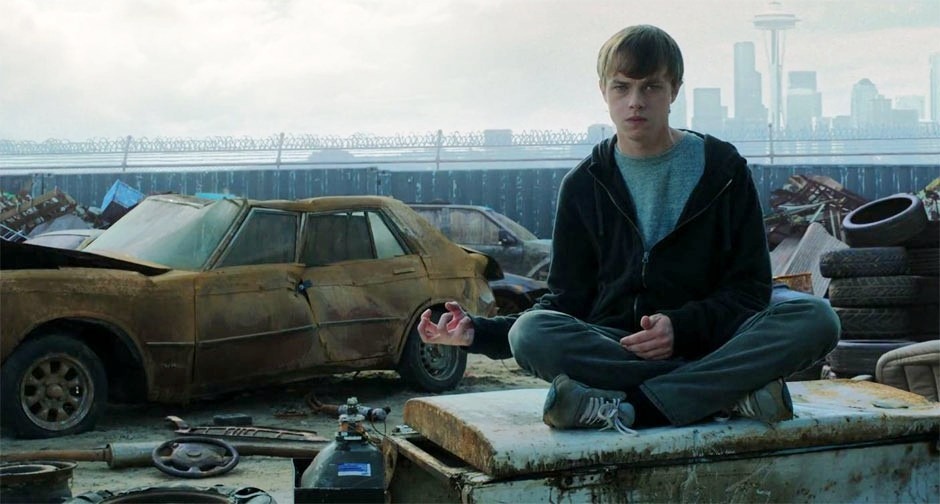
Chronicle (2012)


Director: Josh Trank

Many people seem to dislike superhero origin stories, but when done right they can be the best films of the genre. Chronicle is a good movie in a similar vein. The movie finds a group of kids who mysteriously get superpowers and we then follow them as these superpowers start to define and mold them. Our main character, the one videotaping this found footage style film, is the one who gets the largest arc, one that is informed by his troubled upbringing and difficult home life. Following this type of story to the end is a great idea on paper, and while the teen actors don't always rise to the occasion, the intriguing plot does reach its potential at times and even tries to add some interesting philosophical subtext, though that angle is glanced over.

That all sounds quite serious, but the real joy of this movie comes in the first half when the kids are just experimenting and having fun with their powers. It was like watching an actual documentary on what real teenagers would do if they got superpowers. By giving them superpowers we get to see who these kids really are, but it also functions as wish-fulfillment for the audience. The movie is most enjoyable when watching the three guys just have fun with their powers and discover how to use them. It's basically the "Spiderman tries to figure out how to use his powers" part of Spiderman movies, though the main difference is that Spiderman usually messes up a few times for laughs while in this one the actions of the kids are much more controversial. While the found footage style adds to the documentary feel of the first half, it turns into a distracting gimmick in the second half when the filmmakers struggled to keep the gimmick going when the main camera man doesn't need a camera anymore. By the end it is clear the film is still a genre film, it's a very good one, but it cannot surpass its genre limitations.

Grade: B-

Thursday, October 11, 2012

Heartbeats (2010)


Director: Xavier Dolan

 This is really a minor film that gains most of its memorability due to the sleek and sensual filmmaking on display. The film is about two friends, one male and one female, who both fall in love with the same man. It's a predictable story with not a lot going on, but the story becomes involving and gains emotion due to Xavier Dolan's lush photography, slow motion scenes, and sumptuous colors. The movie also uses talking heads that talk about their experiences with love, and when you combine those with the story of the film it helps the film speak to the power of love. Love is one of those emotions that can overpower an individual to the point where it takes over their whole mind and body, it's an emotion that has a real hold over people, and the film speaks to that power.

In the film we see love threaten to destroy a very close friendship, and this ends up being the case even when that love is over something that doesn't give any love back. Even unrequited love has an immense power over people in a way that really makes no sense, but there is no rationality in love. The story of the film is limited and I never really thought about the plot at all in this film, but Dolan still manages to get these sentiments about love across. I greatly enjoyed and admire this film, but I would recommend the filmmaker as one to watch more than I would recommend the film. Dolan is certainly a filmmaker who has big things ahead of him (he was amazingly only 22 when he made this film) and I will be keeping a very close eye on his promising future.

Grade: B+


Wednesday, October 3, 2012

The Newsroom: Season One (2012)


Creator: Aaron Sorkin

 If I were to extrapolate Aaron Sorkin's political/cultural views from this series and compare them to my own, they would compare fairly favorably. I have very few qualms with Sorkin's political views and agree wholeheartedly with most of them, yet I still have a big problem with this show, and that's because those views are never proven or argued. Sorkin's ideas and views are broadcasted loudly and literally to the audience. This is a television show that does not show, it tells. There are some great moments of wisdom from Will McAvoy or the other characters, but they only work as moments independent from the narrative. That's why the opening scene of the show went viral in our world (the blind nostalgia of that moment actually makes it one of the few things I actually don't agree with Sorkin on). It worked great as an individual scene, but in that sense it's no different from The Daily Show, which does much of what this show wants to do without the illusion of trying to be an actual drama.

While Sorkin was almost never subtle in shouting his hopeful and sometimes naive ideals there were a couple of moments that seemed to actually take place in the real world and show the difficulties of attempting to be righteous. The main one was the episode in which McAvoy goes extremely hard on a homosexual black Rick Santorum supporter, insulting the man on national television, and in the same episode Olivia Munn's character breaks journalism ethics in the pursuit of what she thinks is the truth. That episode showed that you can try too hard to make the world a better place, and that good intentions do not always result in good results. It was easily the best episode of the season in a season filled with just odd moments in which the news team would seemingly travel into the future and get information that they would use in their news reports, Sorkin was trying to make a statement on how the news should have been covered, but he was doing so frequently with the benefit of hindsight. All I've talked about so far pales in comparison though to the ambivalence I felt to the personal stories of the characters. I did not care at all if whatever-his-name got with whatever-her-name or vica versa. The relationships had almost nothing to do with the main goal of the news organizations to do the news better, not literally nor thematically (see the recently reviewed Broadcast News, or even The West Wing, if you want to know what I'm talking about). Having said all of this though, it's not a show I'd recommend, but it's a show I will continue to watch because I am deeply invested in the subject matter of the news media. And even though I like Sorkin much of the time, I also very much enjoy criticizing him.

Grade: C-


Saturday, September 29, 2012

Cosmopolis (2012)


Director: David Cronenberg

 It's not everyday you leave a movie theater confused on whether or not the movie you just watched was a brilliant masterpiece or psuedo-intellectual soulless crap. But this is close to what happened when I finished watching Cosmopolis. It's a movie that is mostly just all conversations, and some very odd, nonsensical ones at that. For example, there is one in which two characters talk about rats becoming the new world currency. My dilemma became "is there legitimate meaning behind all this dialogue or is it all just a fake attempt to try to say something meaningful without actually showing it?" After putting some thought into it, and admittedly giving  Cronenberg the benefit of the doubt, I lean towards actual intellectual rather than psuedo-intellectual. But even if you don't quite understand the concepts and conclusions of the economic and existential conversations, you understand the film because of Cronenberg's direction.

The movie can definitely be defined as soulless, but I'm not sure that's a knock against the film because it suits the subject matter quite well. The film is an examination of a soulless man, a man who has become so cold and distant due to his very sudden rise and fall in wealth and class, which has isolated him from the rest of the world, something that Cronenberg captures extremely well with the many claustrophobic scenes in his limo. He is now experiencing a new feeling of loss, which seems to catapult into an existential yearning for his past, something familiar. The whole movie is him trying to get across the city to go to the barbershop where his family used to get haircuts. Robert Pattinson was made to play the main role. All the negative criticism his acting received for the Twilight movies is a positive in this film. His distant, expressionless performance matches perfectly with Cronenberg's almost-robotic direction.  I'm still not completely sure of what it all means, especially the last scene which appears to turn the film on its head a little too much, but I think Cronenberg got across exactly what he wanted to get across. The feeling of non-feeling.

Grade: B+