Showing posts with label Grade A- movies. Show all posts

Friday, January 11, 2013

Lincoln (2012)


Director: Steven Spielberg

 The title of this film makes it seem like it will be a full-fledged biopic of Abraham Lincoln's life, from the cradle to the grave, and reportedly that's what the filmmakers, Steven Spielberg and Tony Kushner, did plan on in the beginning (he's one of my favorite historical figures so I would have been fine with that too). But instead, we get a film titled Lincoln that almost completely takes place within the time span of a few weeks in January 1865. The decision to center on just those few weeks during the battle to pass the 13th Amendment in the House of Representatives turns out to be a brilliant move. Lincoln is not a scattered biopic about a man, but a film about a specific moment in time that serves as a perfect example of the kind of man Lincoln was. The passing of the 13th Amendment shows us the self-interested world Lincoln occupied, and how he managed to the reality of the world and his own ideals together to actually achieve his goals while preserving the Union. It essentially looks at the main conflict of all politicians, which is to achieve the personal ideals each of them have while occupying a place within a group of people who all have so many various goals in mind.

But this is not just a fantastic film about Lincoln, because by showing us Lincoln's pragmatic nature Lincoln also turns out to be one of the best films I've seen about the nature of politics and democracy. The film may be centered on Civil War-era politics, but it is a film that applies to the politics in any part of the world at any time. Spielberg and Kushner aren't afraid to be remarkably honest about the often dark nature of politics. It's not a cynical movie about how everything is corrupt because we do see success, but it's also not naive about how that success was achieved. The passing of the 13th Amendment was a great accomplishment, but we see the not-quite-ethical tactics used and deals made by the men of the era that ended up aiding in the abolishment of slavery. Many have accused Spielberg in the past, myself included, of being too sentimental and naive in many of his dramas, but with Lincoln Spielberg has uncharacteristically made a procedural that is more grounded in its approach. Especially when compared to last year's overly sentimental crowd pleaser War Horse, Lincoln is a film that is not afraid to get down and dirty and look at the unflattering ways great things happen. Lincoln the man is a genius not because he believed in a higher ideal and inspired everyone around him to take a stand, but he we see that he was a genius because he was a pragmatist who knew how the world worked and knew how to get things done. Lincoln is a great film precisely because it does not show him as a saint, but as a great politician with a heart.

Grade: A-

Tuesday, January 1, 2013

Life of Pi (2012)


Director: Ang Lee

 Almost never does a great book turn into a great movie, and why should they? Books and movie are two different mediums, each with their own advantages and disadvantages. Yann Martel's novel is in my opinion, a masterpiece. It's a poignant and thought-provoking treatise on religion and spirituality in the modern world. A faithful film adaptation of a masterpiece novel such as this will almost always be of lesser quality, just as a book adaptation of an inherently cinematic film (like 2001: A Space Odyssey) will not be as good as the film. This is all to say that I don't believe Life of Pi is as good as the book but that doesn't mean it's a bad movie or a bad adaptation, quite the contrary actually. The fact that Ang Lee actually filmed this novel is an impressive enough achievement on its own, and not only did he put it on screen, he did so in fantastical and magnificent fashion. The film is littered with spellbinding images of the ocean and mostly realistically rendered CGI animals. The vast expanse of the never-ending ocean is created beautifully and illustrates the serenity of loneliness that Pi feels out by himself stranded in the Pacific Ocean. The 3D also adds to the experience (a rarity) and is a valuable tool when it comes to capturing life on a small lifeboat.

The visual experience of the film is the most impressive thing Lee has done with this adaptation, emphasizing the beauty of the world around Pi, an important factor when it comes to how exactly Pi gets the resolve to actually survive the long and difficult ordeal. The book and the movie both are really all about how we choose to live (or survive) this difficult world, and why faith and religion is the answer for so many people around the world. The "twist" ending isn't really a twist as much as it is a revelation of what the story is really about, which is the choice between a life of beauty and purpose or a life of brutality and death. I'm not sure the film makes this analogy as clear as it could have been, the film does seem a bit more preoccupied with the survival aspect of the story rather than the religious aspects. But nonetheless, those religious aspects that made the book so great are certainly there if you want to find them. While the power of the film is a bit muted for me personally because I've experienced this story before, this really is the best faithful adaptation of the book that could have ever been made.

Grade: A-

Wednesday, December 19, 2012

You Can Count on Me (2000)


Director: Kenneth Lonergan

 The one thing that stands out the most from this quiet drama is that its central relationship is a brother-sister relationship. When I saw this I realized that you just don't see that very often in art. You don't often see an honest brother-sister relationship be the central relationship in pop culture. When you see an honest real-life relationship expressed on film, it all becomes so much more captivating. Voyeurism is a big reason we watch movies, and when we see something that feels extremely real we get drawn in. On top of that, the writing, acting, and directing by all involved are top-notch. Each actor, Laura Linney and Mark Ruffalo (and even the son) are amazingly honest in their roles and by the time one of the characters recites the title of the movie to another towards the end of the film, you are incredibly attached to these characters

The filmmaking on display is unobtrusive and realist. It's a movie that tries to feel honest above everything else. It's not a flashy drama, neither is it that ambitious either. The descriptions of the characters aren't too exciting: one is a single mom struggling with her personal life and the other is a struggling 20-something year old guy who's a bit of a free spirit, but it's Lonergan's writing and the great performances that make these people come to life in a way that is engaging, emotional, and tugs real hard on your heart strings. The theme of the movie is fairly simple (see the movies title for a hint), but it comes across powerfully. You don't get attached to characters like this in movies often, as opposed to TV characters, mostly due to lack of time in fleshing them out. But with this film, I reached the end of it feeling like these siblings were part of my own family.

Grade: A-

Saturday, October 20, 2012

Chungking Express (1994)


Director: Wong Kar-Wai

When you think of a film from Hong Kong, you usually think of police thrillers, because those are the types of Hong Kong movies that have achieved success all over the world. But in this film, Wong Kar-Wai takes that idea and turns it on its head. He tells two stories that are just barely connected, each about a police officer in the bustling urban jungle of Hong Kong, but the two police never get involved in shootouts and the film isn't some frenetically paced action film. Instead, both stories are existential stories of the difficulties of finding romantic emotional connection in an urban world. Hong Kong is a place that has a dense population in which you'll see a sea of people either way you look, but this film looks at the paradoxical effects that has on finding real emotional connection in such a dense world.

The first story is more of a noir film with a similar tone to Blade Runner complete with existential mysterious characters, but the second film switches it up completely and is more of a screwball romance influenced more by Jean-Luc Godard with its quirky, loveable yet flawed characters and its guerilla-style down and dirty filmmaking. The second story takes more than half the running time and is more satisfying as a whole and really overshadows the first (this would be more of an issue if the first story took up more running time, but it doesn't). The first story establishes the idea of finding connection in a disconnected place, and the second one takes it all the way, creating a full romance that is entertaining but also one that has the characters actually taking action and trying to do something about the dissatisfaction they have (the frequent use of the song "California Dreamin'" in the second story establishes the idea of yearning for a new experience just so well). This is definitely a film I'll be coming back to, the second story is just so visceral and affecting on so many levels, and I feel like I'll see a lot more in that first story when I see this one again.

Grade: A-


Thursday, October 11, 2012

Battleship Potemkin (1925)


Director: Sergei M. Eisenstein

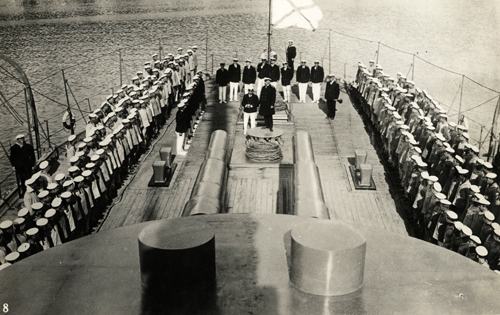
 One of the important thing this film does is make you think about the difference between filmmaking as art and filmmaking as propaganda. Can a film that is obviously propaganda be considered art? Battleship Potemkin gives a lot of credibility to the "yes" side. It's a film that is explicitly revolutionary propaganda recreating a rebellion by a Russian battleship against their Tsarist officers. But it's also a very powerful film that used film editing in a way that was never used before, and those techniques only made the film much more powerful. The film is above all a testament to the power of film as an art form. It's a great example of what film really can do and the extraordinary power it can over those who watch it. Film can inspire and it can excite and Eisenstein was one of the first who really took advantage of this power (Joseph Goebbells also learned this power from this film, reportedly).

While the film is known more for being influential, especially in its editing techniques most famously displayed in the Odessa steps sequence, there are many great things about this film that still stand the test of time. The film is only about 70 minutes long or so, so the film doesn't try to build characters as people, what it does is create symbols within the characters. There is no individual, everyone represents the group, and if everyone rose up together against oppression, freedom can be won. One of things I liked most about the film is its message that soldiers are not just pawns of a government. They are citizens of their country like everyone else, and so they have the ability to rebel against their commanding officers and stand side-by-side with their non-military brethren. Sure the movie is famous more for its influence, but even today, almost 90 years later, it is still a powerful piece of work.

Grade: A-

Wednesday, October 3, 2012

Broadcast News (1987)


Director: James L. Brooks

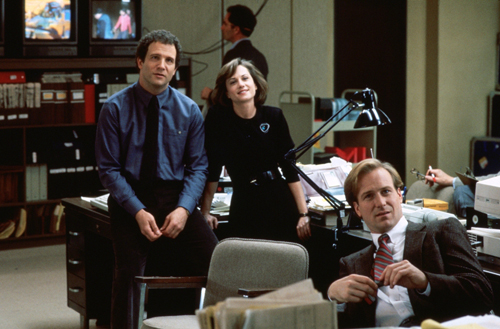
 If you describe a movie to me as being a Hollywood workplace romantic comedy with a love triangle, I probably won't go in expecting to love it. Mostly because it's just a tired formula that Hollywood has done over and over again only because it's a consistent moneymaker and not because there's any artistic merit left in the genre. That's why I was enormously surprised at how much I loved James L. Brooks Broadcast News (also because Brooks himself doesn't have the greatest track record). In this film the workplace is a broadcast news station, but it's more about the people who work in the news than the news itself. But that's why it works. The people provide the emotion, and you get very quickly attached to the characters. There is subtle commentary on the "showbizification" of broadcast news, but the brilliant thing is that it's never broadcasted (pun intended), and instead it's all subtle and fully at the service of the characters.

The three main characters (each played brilliantly by Holly Hunter, Albert Brooks, and William Hurt) are perfectly realized. They each stand for something bigger than themselves, but are still real individuals. Hunter plays a working woman who is successful in her professional life, but struggling in her personal life (think Liz Lemon). As we go through the movie both strands of her professional and personal life are connected together, and at the end of the movie the ethics and principles of her career are actually brought full circle into the romantic conflict in her personal life. It's truly brilliant writing that captures both ideas and emotion. Even though the film is a Hollywood romantic comedy, it still finds a way to be unconventional. You'll find a happy ending in the movie in which things work out to a degree, but it's not the traditional happy ending you would expect. The film makes the statement that while things may not go your way the way you want them to, they will still end up going your way.

Grade: A-

Sunday, September 23, 2012

Beasts of the Southern Wild (2012)


Director: Benh Zeitlin

 The American independent movie has become a genre unto itself. They're usually comedic films with some drama mixed, stylistically bare and low-key, and usually starring young 20-something year old people dealing with "relatable" human issues that speak to the modern day. But here comes Beasts of the Southern Wild to give American independent cinema a jolt of life. It's a film filled with magical realism and a folksy but lyrical tone. It's set in a island off the coast of Louisiana in a small community with no connection to the outside world. They are self-sufficient and proud of it. Our lead character is actually the opposite of the cultured, privileged, whiney college graduate whose trying to learn how to function in the world that we see in so many American independent films. Our lead character is Hushpuppy, a six-year-old girl who is learning to come to terms with how nature works. It's a coming-of-age story, only the person who is coming of age is only six years old.

When stripped from the lyrical camerawork, the historic mythology, and the cultural tics the film is essentially about the spirit of individualism and a celebration of independence. It can be construed as a libertarian movie, but even if you're not a libertarian the film will still ring true because the independence of the characters comes from a distrust of others that I think all of us can understand. People leave us, whether it's voluntarily or through death, and we all need to get used to that just as Hushpuppy learns. While the movie never explicitly references Hurricane Katrina it does call back to it quite obviously and the effects that it had on the people who called that area home for so many years. The movie humanizes those who stay behind with their homes during a hurricane, because it emphasizes the importance of a place called home, especially in a community that gets no support from the outside world. As you can tell there's a whole lot of allegorical analysis that can be done with this film, but I still believe that the reason this film is powerful is because of the journey of Hushpuppy as little girl trying to make sense of the world. Beasts of the Southern Wild does something that should be impossible. It combines childhood imagination and naivete with the very adult qualities of responsibility and independence.

Grade: A-


Wednesday, September 5, 2012

Moonrise Kingdom (2012)


Director: Wes Anderson

 Children want to grow up. Adults want to become kids again. This is what Wes Anderson's newest film is primarily about. It's not something new to his films (you can read my examination of his whole filmography here), but it's done better in this film than before. The two idealistic kids in this film who elope together believe they are in love and are mature enough to take the world on. The two kids seem to act more like adults than the actual adults in the movie. The adults that are looking for them are sad and filled with melancholy. They're fed up and yearn to go back to the innocent days of their youth when they believed in things like love. Moonrise Kingdom is a movie filled with sadness through its adult characters, but through the younger characters we see hope and idealism. Getting these two disparate elements to work together in the same film is a perfect example of what makes Anderson such a marvelous filmmaker.

Anderson displays this all with his trademark idiosyncratic style, and he can get away with it in this film more so than previous ones because of the time period and the fact that it's set in a pretty small town, and small towns have a knack for being idiosyncratic in their own ways. The cutesy Godardian style also fits the storybook aesthetic and substance of the film, as our two lovebird characters share a storybook love. Anderson displays that love through some marvelously humorous but oddly beautiful moments between the two. Anderson has a knack for drawing you in with his unique sense of style, and keeping you invested through the real and affecting characters. This is a film that Anderson gets completely right. The writing, the visual style, the acting, and even the music is all flawless, and they converge together as whole as well as any Anderson film has to date.

Grade: A-

Wednesday, July 25, 2012

The Proposition (2005)


Director: John Hillcoat

 When we think of a western, we usually think of the old American west, but this great western is set in the barren lands of old Australia. The landscape is similar to the landscape of American westerns, but instead of Native Americans roaming around, you have Australian aboriginals. The best westerns are always the ones that manage to capture the desolate landscape and the effect the never-ending land and its savagery can have on people (last years Meek's Cutoff is the most recent film to capture this successfully). John Hillcoat directs this film paying close attention to larger thematics and dilemmas instead of focusing primarily on screenplay, which could have easily been made into a by-the-numbers action-western by another director.

Guy Pearce's character has a moral dilemma, and that is whether or not he will kill his wanted older brother for the sheriff in order to save his wanted younger brother who has been captured by the police from death. The film never takes a side morally. Even though Pearce's character and his brothers were involved in a horrible massacre of an innocent family, it's not easy to root against them because we see that the colonial police can be just as brutal. Flies, the insect, fly all over the place when we see the police, perhaps to symbolize that the "good guys" are just as "dirty" as the criminals. On top of all that, Nick Cave's music (he is also the screenwriter) makes the movie meditative when it needs to be and extremely exciting it when it needs to be as well. The music combined with the brilliant cinematography and Guy Pearce's great performance makes for a movie that's more of an experience than anything e lse. The screenplay is good, but it's simple. Hillcoat then takes the simple story and creates an emotional and even exciting film.

Grade: A-

Friday, June 29, 2012

The Good, the Bad and the Ugly (1966)


Director: Sergio Leone

 On the page this film is basically an average Western, but with Leone's direction it becomes a fantastic piece of cinema that is one of the most memorable Westerns made. This is a film with some spectacular directing. The shot selection and control of tone by Leone in this film is accomplished flawlessly. Leone uses such a wide array of shots, from intense close-ups that show each drop of sweat to wide-ranging shots of desolate landscape where the characters are just specks in the frame, and somehow it all seems appropriate. Then you've got the now iconic music by Ennio Morricone that sets the stage during all the suspenseful showdowns. This is a film that can only be described as epic.

This film is one of the best examples of how a great director can elevate a pretty bland and average story into something with tension and excitement unlike any other. I do like my films to have some greater meaning, and this one doesn't quite accomplish that too well, but it is impossible to ignore the level of talent that is needed to successfully pull of a film like this. Though I'm not saying all the writing is bland, there are some individual sequences in this film that are quite clever. I wasn't quite impressed with the two previous spaghetti westerns Leone did, but this is the one where everything really came together and where Leone's trademark style really comes into fruition for me.

Grade: A-

Friday, June 15, 2012

Stardust Memories (1980)


Director: Woody Allen

 The thing that has set apart Woody Allen from everyone else, in my mind at least, is his ability to take complex themes and ideas from filmmakers like Ingmar Bergman and Federico Fellini, and apply them in an American context that is not pretentious or dumbed down. This film is one of the great examples of this. Stardust Memories is one of Allen's most personal films, and is autobiographical in the way 8 1/2 was autobiographical for Fellini. Though at first it may seem like a parody of 8 1/2, it actually is more inspired by it and translates it through Allen's own personal behaviors and issues.

The movie is almost free-associative in structure so it's not the most plot-heavy film, but it's not a hinderance and actually helps in understanding Allen's character and his idiosyncratic personality. The movie is essentially an all-encompassing work about Allen as a filmmaker and Allen as a man, and all of that filtered through his never-ending and always failed search for happiness in an absurd world. It is a very honest, personal, and revealing film, as you would expect from Allen, but this one seems more directly associated with Allen the real man, instead of a character played by Allen. So far, this is one of my favorite Allen films, all because it's such an odd yet personal piece of work by and about a guy that is fascinating in how he embodies the pessimistic yet joyful outlook at life we all have.

Grade: A-

Wednesday, June 6, 2012

Stolen Kisses (1968)


Director: Francois Truffaut

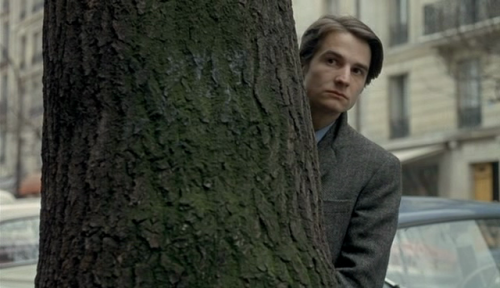
 Previously I reviewed Antoine and Colette, the second film in Truffaut's Antoine Doinel series. This film here is the third. One of the first things that stands out in this film is the performance of Jean Pierre Leaud and how he has so perfectly evolved into the character of Antoine Doinel (or maybe the character evolved into him). His acting, plus Truffaut's writing and directing since the character is semi-autobiographical, all do so much to get across all the ticks and small characteristics that make Doinel who he is.

In this film Doinel is largely the same person he was in The 400 Blows and Antoine and Colette, but in a much more adult world. Once again Doinel is a guy who just can't find his place in society. The way he goes from job to job, and from young woman to old woman in the movie is proof of his inability to have a stable life. Doinel just can't find where he's supposed to go in society, and it's a theme that I believe many can sympathize with in some way. While there are many great comedic moments, ultimately the film is once again a tragedy in which we feel bad for Doinel and blame society for being so uninviting.

Grade: A-

Monday, April 30, 2012

The Seventh Continent (1989)


Director: Michael Haneke

 Based on a real event in which a family inexplicably kill themselves after destroying all their possessions, Michael Haneke's brilliant debut feature film can be hard to watch, but that's only because the movie wants the audience to have a hard time. The first two thirds of the film are composed of two days in the life of this family, both days separated by a year. They are a bit boring at first, but in retrospect you realize that it is exactly the mundanity of these two days that is so important to what happens on the third day, in which everything unravels.

There is no direct given reason as to why everything unravels and this family does what they do. Instead we see it as a general symptom of their alienating and pointless daily lives. Haneke shows us this by intense close ups of everyday items, forcing us to actually notice the things we do not usually notice. Haneke is such a visceral and powerful filmmaker, he is definitely a provocateur, but he never uses gimmicks. He is not a filmmaker who is afraid to go after the audience and be immensely critical (See: Funny Games). With The Seventh Continent we see that Haneke always had this quality, and he has yet to lose it.

Grade: A-

Thursday, April 12, 2012

All That Heaven Allows (1955)


Director: Douglas Sirk

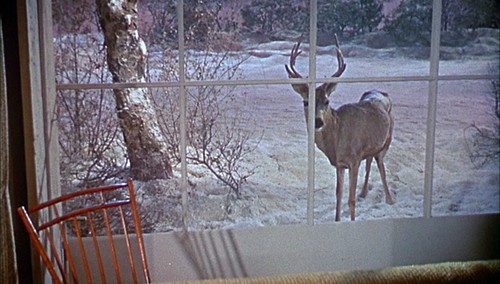
 This is a film that was surprising, because it is an American movie made in the 1950's, and so you would not expect much rebellious subtext. But this is a film that is very subversive and is very perceptive of the ills of social status. The movie combats love vs. social status, very familiar theme in romances, but this movie focuses less on the love between the couple, and more on the unfair social status system threatening to end it all.

I've already reviewed a couple of films that criticize elitist culture in the past few months (The Rules of the Game, Smiles of a Summer Night), and this movie is definitely comparable to those great films. We have heard bourgeoise criticism before in the movies, but rarely from an American standpoint. Another great element is beautiful lush color photography that highlights the melodrama in the situation and the truly tragic nature of the romance. This is a wonderful film that is truly quite surprising.

Grade: A-

Wednesday, March 21, 2012

Afterschool (2008)


Director: Antonio Campos

Internet videos have enabled us to see and experience so much more of the world than we had been able before, and Afterschool captures this phenomenon by focusing on one particular event caught on tape that deeply affects a prep school. This is a film that captures the Youtube generation unlike any film I've ever seen. We have a main character who continuously watches videos on the internet, from videos of animals making music to videos of school fights to hardcore porn. But when he accidentally captures a death on camera and experiences it in real life, he is unable to process the reality of the situation.

This is a film with a formalist style worthy of Stanley Kubrick and Michael Haneke. It's cold and clinically shot by a 24-year-old filmmaker who displays an amazing amount of control in his feature film debut. The camera itself serves as a voyeuristic eye similar to the videos at the center of the film. Frames are blocked in a very precise manner, but it seems like there is no sense of blocking because people are always oddly cutoff by the edge of the frame and it makes the movie seem like something captured and not staged. The camera does not move much, but when it does it avoids mobile framing, instead it does not anticipate the movements of the actors, again acting as a voyeuristic eye. All of those visual decisions actually lead up to the final shot, a shot that makes you question the most important person in the room, yourself.

Grade: A-

Friday, March 16, 2012

The Insider (1999)


Director: Michael Mann

 What could easily have been a conventional story about a contemporary social issue, is instead a genuinely powerful drama that looks both at the world we live in and also how the ills of the world affect individuals. The best part about this film is that it starts as a story about the ills of big tobacco, a subject that frankly is not so risky anymore, but it then turns into a story about the far-reaching influence of corporate power and their influence in the media, which is a subject that is far more risky and maybe more important today. The Insider is not a movie that focuses on the story that the whisteblower is revealing, but the whisteblower himself and the issues he must go through to do the whistleblowing.

It's a very relevant film to today in terms of the difficulties of revealing secrets (i.e. Wikileaks and Bradley Manning), but also the reaches of corporate power in the media and how that can affect journalistic ethics. It may not be the most accurate film when it comes to the details of the story, but it is very true in its message. Once again, Michael Mann uses some great filmmaking techniques, like music, great handheld camerawork, and an innate ability to thrill through his camera, to rise above what is largely a fairly conventional structure and story. It's hard to get affected by stories we see everyday, but Mann has this ability to infuse conventional stories with a real and powerful emotion.

Grade: A-

Smiles of a Summer Night (1955)


Director: Ingmar Bergman

 Nowadays we've got fairly low expectations of our romantic comedies. It's incredibly rare to see one that actually is funny and has something interesting to say about romance and love. But this film is a romantic comedy more in the sense of Woody Allen's movies (more accurately, Allen's movies have a Bergman-esque sensibility). This is a film about the never-ending game between the sexes, specifically the upper class. They treat marriage like a game, and respect fidelity only on the surface. The only reason the individuals in this film don't like being cheated on is because they have agreed not to cheat, and they believe that both "lovers" in a relationship should merely hold up their end of the bargain.

The film has a surprisingly modern sensibility towards marriage, especially concerning the lack of seriousness when it comes to marriage. The movie seems like it was written by a person who knows how it feels and has been in similar situations, and from what I know about Bergman, this seems to be the case. The movie is simple, but the characters are real, and Bergman treats the subject matter with class and responsibility. It might sound like a downer, but by the end it's a film about finding love and faith in the midst of the chaos of infidelity.

Grade: A-

Monday, March 12, 2012

Heat (1995)


Director: Michael Mann

Auteur cinema in Hollywood is incredibly rare, especially today when Hollywood is just focused on movies with $200 million budgets. With budgets that size, the studio will be very involved, and film becomes nothing but a business. But there are a couple of directors I can think of that succeed in retaining their artistic integrity and still operating within the major studios of Hollywood. One of them is Martin Scorsese, and the other is Michael Mann (Steven Spielberg might be one too but I'm not so sure). Arguably Mann's most famous film, Heat, is a great example of just that.

Mann created an epic crime film that takes the conventional tropes of the police-crime drama and adds real meaning and emotions into it. He's not only great at taking those conventions and making them really effective (like the shootout), but he addresses them by having the characters realize the inevitability of their situations, both professional and most of all personal. Both Al Pacino's police character and Robert De Niro's criminal character know who they are in this game and what role they play, it's nothing new to them. Both are completely aware of the consequences of their work on their own lives. Mann also maintains a brilliant control of tone and direction that uses the music, the lighting, the sound, and the editing to emphasize the highly personal and fairly existential nature of this epic city-spanning movie. When it comes Hollywood genre filmmaking, nothing comes close.

Grade: A-

Wednesday, March 7, 2012

The Interrupters (2011)


Director: Steve James

I thought it would be pretty hard for a social issues documentary/long-form PSA to faze me in anyway, but then I saw The Interrupters. This documentary is an incredibly powerful movie that takes the giant issue of gang violence highlights it for what it is. The documentary focuses on a group of "violence interrupters" who go around preventing fights and violence. It is extremely telling that the head of this group used to be a doctor, because gang violence is an epidemic that affects an incredible amount of people living in urban areas around the country and it will continue to rise because of the growing urbanization of our country.

Director Steve James, who also directed maybe my favorite documentary of all time, Hoop Dreams, embeds himself within these people who are trying to make a difference, and in doing so not only see the problem, but also the problems that may come about in finding a solution. You don't always see movies that show us the problem, but also the ways people are trying to solve the problem and the reasons why those efforts are not entirely successful. Honestly, The Interrupters is a movie that can spur action in anyone, and it's something I felt a deep connection to. There's nothing flashy about it, but it doesn't keep it from being one of the most effective "take action" documentaries I've seen in years.

Grade: A-

Saturday, March 3, 2012

L'Enfant (2005)


Directors: Jean-Pierre and Luc Dardenne

Modern culture has celebrated and encouraged arrested adolescence. This mantra of leaving adulthood till as later as possible. In this Dardenne brothers movie, the other side of that notion is shown. What happens when that type of person first encounters adult responsibilities. Our main character, Bruno, finds himself living in a part of town that is lacking in jobs, and so he usually spends his time doing petty crime trying to make some money. But he then has a child with his girlfriend, and while his girlfriend is similar to him, she seems to have a better sense of responsibility than him now that she's had a child.

The story is a coming-of-age tale for Bruno, but one that is more effective than most because Bruno actually faces real lasting consequences for his rash decisions. Purely as a descriptive term, the movie is bit like Truffaut's The 400 Blows meets Godard's Breathless. Bruno is similar to Michel in Breathless, but what happens to Bruno, and the tone of the movie, is more similar to The 400 Blows. The Dardenne's trademark documentary-like observational approach is used once again very effectively to help give the movie a completely natural feel. It is also important they capture the working-class milieu of Bruno's environment, because that gives us subtle hints as to why it may not be completely his fault as to why he is stuck in this arrested development.

Grade: A-