Showing posts with label HBO. Show all posts

Wednesday, January 23, 2013

Curb Your Enthusiasm: Season Two (2001)


Creator: Larry David

The chain reaction humor, the miscommunications, the victim of circumstance, all those elements that were at play in the first season of the show are once again on full display here in the second. In some cases they're refined and done even better, but most importantly there are some stakes that are introduced. Larry pitches a TV show with Julia Louis-Dreyfus and his actions during the show actually have consequences for how those pitch meetings go, which is to say not well. There is real damage done to his career and personal relationships. Now the show is still very episodic, as the TV show pitch plot comes and goes, and there's not much of a serial narrative.

The show still is a joy to watch just because it's quite expertly plotted, though the structure is a little familiar now, and so we're pretty sure that the odd thing that happened to Larry in the beginning of the episode is going to come back to bite him in the ass later on. One particular episode that stood out was the episode with Shaquille O'Neal. That episode was special because it introduces a new experience in Larry's life. We've been seeing the same side of him for the whole show but that episode we see a different side, a side that is satisfied with the worlds reaction to him. He finds himself in a situation in which he doesn't have to deal with people anymore, and he loves it. I definitely hope for more adventurous episodes like that one in the future. It's a hilarious show that I think has the potential to be even better.

Grade: B

Friday, January 4, 2013

The Wire: Season Five (2008)


Creator: David Simon

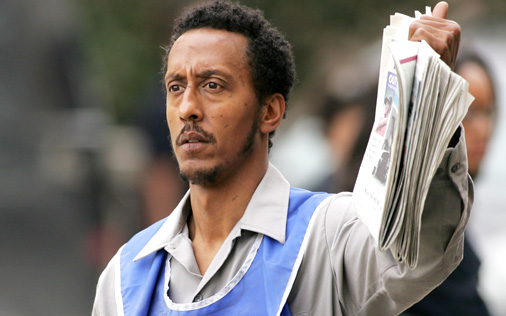
Lets get this out of the way first, if I had to rank each season of The Wire I would pick season four as the best and season five as the worst. But even the worst season of this show is better than almost anything on television right now. That just goes to show how great this series is, and why it's justified when people say that this show is the best ever. This final season had a few goals. The first was to bring in the institution of journalism in the world of The Wire, a profession that creator David Simon knows a whole lot about since he was a Baltimore Sun reporter before he started the show. The media is an appropriate focus for the shows final season because the media is the middleman between the people and the governmental institutions and what keeps the people from knowing about the failures of those institutions. Simon shows us why the media is as guilty as all those other institutions when it comes to the question of why nothing ever changes. The media is just another cog in the machine, being oiled by the same forces of surface-level achievement and personal success.

The second thing the season did was to give us another Hamsterdam-like solution and then shoot it down. This time we see that even when we have good people in office, getting resources to where they belong can be difficult, and so we observe what kind of drastic things need to happen in order for those resources to come. We see McNulty invent a ridiculous fake serial killer in Baltimore, but it's quite tragic how serious he needs to make it and how he needs to sacrifice his whole career in order to get the resources to fix the real problems. That reflects a theme that The Wire has advanced over and over again: The individual gets devoured by the institution. Doesn't matter if the individual does the right thing or the wrong thing, they will get devoured. It all also ties into the lies that fund all of these institutions. The newspaper gets a chance to win Pulitzer's because of a reporters exaggerations and lies the same way the police department exaggerates stats to fake success and maintain funding. The third and final thing this season does was to meticulously craft and conclude the stories of all these characters in a way that ends in mostly the same way it all started. That's the conclusion that Simon wants and that's what he shows. Despite all the strong idealistic individuals, everything is cyclical, and everything stays the same. The game is the game, and the game will always stay the game.

Grade: A

Tuesday, November 27, 2012

Curb Your Enthusiasm: Season One (2000)


Creator: Larry David

It was hard for me to figure exactly what this show was trying to do in its first season, but it was certainly funny and showed potential. Larry David plays himself, and he plays sort of a social observer role poking fun at social norms. His character is in the vein of Woody Allen, but without the personal stakes that Allen had in his films. David shows great talent in plotting episodic TV comedy, but I found his character mostly one-note, because unlike Allen's films, there wasn't much at stake. This is a show though that has gone on for many seasons, so I would not be surprised to learn quite a bit more when I see more episodes (and similarly I can't imagine a show like this going on for 5+ seasons without stakes).

The average episodes basically seem to unspool a yarn of unfortunate events that occur due to unforeseen events that unfold due to usually some innocent action that David did. It's the classic comedy of chain reaction. For example we might see one very subtle racist comment that David makes becomes so much more by the end of the night, affecting his wife's health. Even though the dialogue is improv, the plotting sure isn't, and the plotting is done very well and seems almost effortless which is remarkable considering the planning that has to go into writing these types of stories. What the show does well this season is establish a tone, and a feel for who David is. I hope the subsequent seasons do better in creating cohesive stories that actually affect David's life more substantially.

Grade: B-

Wednesday, October 3, 2012

The Newsroom: Season One (2012)


Creator: Aaron Sorkin

 If I were to extrapolate Aaron Sorkin's political/cultural views from this series and compare them to my own, they would compare fairly favorably. I have very few qualms with Sorkin's political views and agree wholeheartedly with most of them, yet I still have a big problem with this show, and that's because those views are never proven or argued. Sorkin's ideas and views are broadcasted loudly and literally to the audience. This is a television show that does not show, it tells. There are some great moments of wisdom from Will McAvoy or the other characters, but they only work as moments independent from the narrative. That's why the opening scene of the show went viral in our world (the blind nostalgia of that moment actually makes it one of the few things I actually don't agree with Sorkin on). It worked great as an individual scene, but in that sense it's no different from The Daily Show, which does much of what this show wants to do without the illusion of trying to be an actual drama.

While Sorkin was almost never subtle in shouting his hopeful and sometimes naive ideals there were a couple of moments that seemed to actually take place in the real world and show the difficulties of attempting to be righteous. The main one was the episode in which McAvoy goes extremely hard on a homosexual black Rick Santorum supporter, insulting the man on national television, and in the same episode Olivia Munn's character breaks journalism ethics in the pursuit of what she thinks is the truth. That episode showed that you can try too hard to make the world a better place, and that good intentions do not always result in good results. It was easily the best episode of the season in a season filled with just odd moments in which the news team would seemingly travel into the future and get information that they would use in their news reports, Sorkin was trying to make a statement on how the news should have been covered, but he was doing so frequently with the benefit of hindsight. All I've talked about so far pales in comparison though to the ambivalence I felt to the personal stories of the characters. I did not care at all if whatever-his-name got with whatever-her-name or vica versa. The relationships had almost nothing to do with the main goal of the news organizations to do the news better, not literally nor thematically (see the recently reviewed Broadcast News, or even The West Wing, if you want to know what I'm talking about). Having said all of this though, it's not a show I'd recommend, but it's a show I will continue to watch because I am deeply invested in the subject matter of the news media. And even though I like Sorkin much of the time, I also very much enjoy criticizing him.

Grade: C-


Friday, September 14, 2012

The Wire: Season Four (2006)


Creator: David Simon

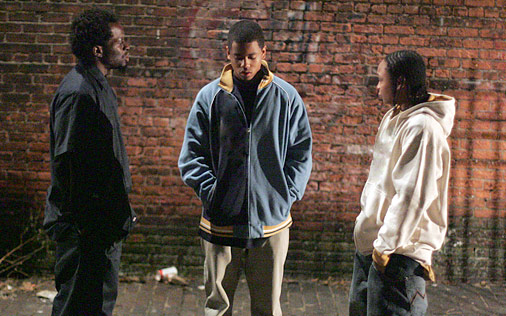
 After three seasons in which the scope of the urban American problem was expanded each season, the fourth season of The Wire takes a few steps back and shows us the root of the problem. It all begins with the children on the street. Maybe you were wondering what all the gangsters on the street did wrong as kids to get into this situation. Why did they end up on the corner with drugs and a gun? And why can't one of these kids just focus, go to college, and make a life for himself? Well here is your answer. These kids are smart, clever, good-hearted, and innocent, but the environment they live in draws them into the harmful sludge of urban society. It's not even that these specific kids were at the wrong place at the wrong time, because the thing is, every kid in their neighborhood is in the wrong place at the wrong time. The fates of these children were planned since the day they were born.

The season follows four kids, all of whom take very different paths that seem to end up in places not too far from each other. They all display a potential to do something, to be something more. But if you've seen The Wire you know not to expect a happy ending where one of the kids from the ghetto grows up to be that astronaut he always wanted to be. But the show doesn't shy away from showing success, we see a relative win with the fate of one of the kids. But even then, we see how the system makes that success so much harder than it needs to be. The ending of this season will have you in tears, and it won't be because of some kid having a cathartic breakdown or someone dying, it will be because of the overwhelming sensation that comes over you in which your emotions finally take in the realization about how messed up everything is. It's a feeling that I've honestly never had before watch any TV show or movie. I've never felt a grander sense of tragedy than I did when I finished season four of The Wire. This is why that out of all the great seasons of The Wire, this season is the greatest.

Grade: A

Monday, September 10, 2012

Girls: Season One (2012)


Creator: Lena Dunham

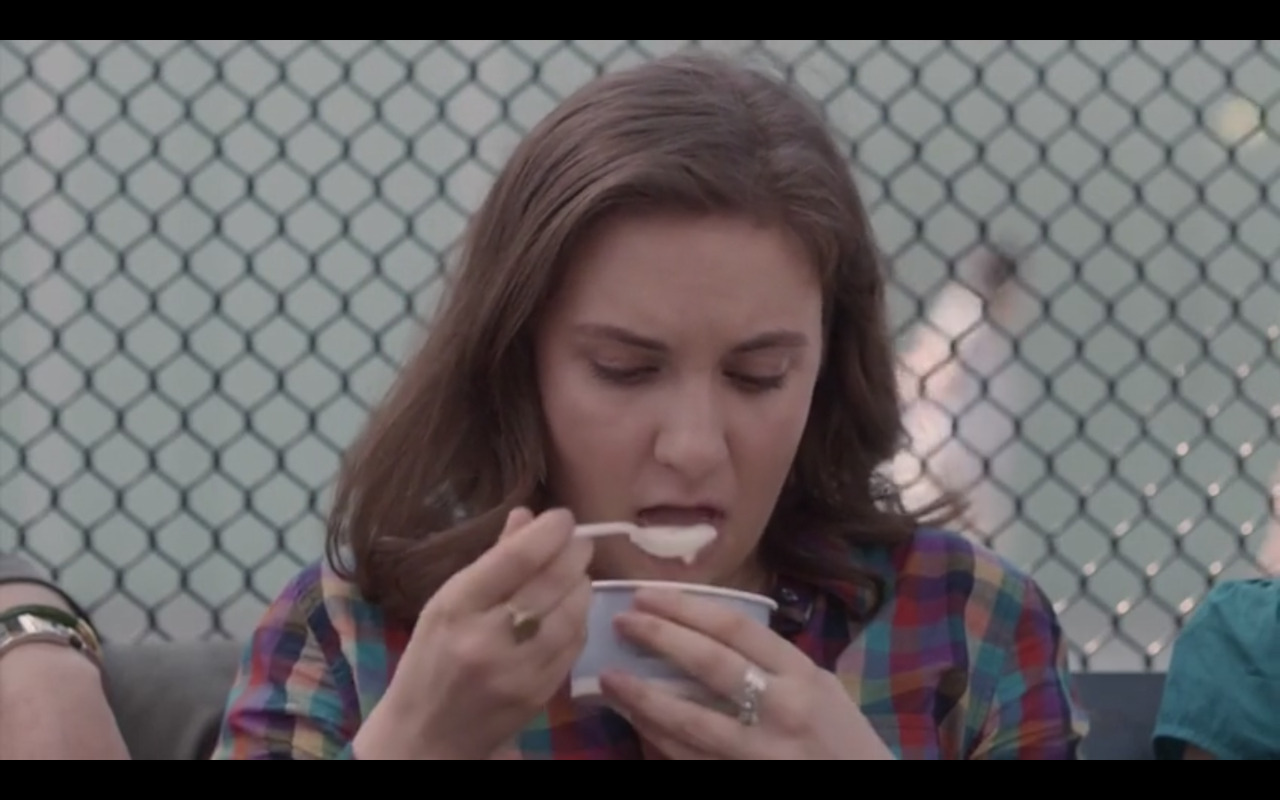
This show about a mid-20's aspiring female writer living in modern-day New York City initially caught my attention due to its refreshing authenticity. The main character, Hannah, was slightly overweight who was definitely not your average Hollywood starlet. There was sex, and it was not glamorous and wild. The cast of characters were people who I could imagine meeting in the real world, flaws and all. Much of this is because creator/writer/director/actor certainly brought much from her own life into the show and that brings a lot of authenticity and honesty into the characters and situations.

Hannah is by no means the greatest person and is certainly not very "likable," and that's not a flaw. It's actually a strength. Hannah is self-obsessed and she believes that the problems she has in her life are unique to her, even though clearly they are not. This self-obsession is the main constant of the season. It's the reason she has most of the problems in her life, and it's the reason she can't solve most of those problems. While Hannah and her friends represent a small slice of humanity, this theme is what enables it to expand into other facets of culture and different types of people. The show does comment on society occasionally, but it's above all about individual problems (if it could do both it would be as good as Mad Men). As good as the show is, there is definitely room for improvement as well. The momentum of the narrative could be done better, and there are lots of moments on the show that could have a greater impact with a better visual eye. But Dunham is young, and if she is someone who learns and improves from the past, then she is definitely going to be a filmmaker to watch.

Grade: B+

Monday, August 6, 2012

Veep: Season One (2012)


Creator: Armando Iannucci

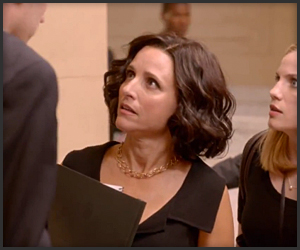
 If you've seen In the Loop, the 2009 British film by the same guy who created this show, then you'll know exactly what to expect for Veep (if you haven't seen that movie but like Veep, then you really need to watch In the Loop). The comedic style is dialogue-heavy with a bit of an absurdist slant. It takes a slightly exaggerated, but true in theory, look at the world of politics. Veep gets a lot right about politics in America, even if much of the show is a bit out there. D.C. politicians don't throw creative insults around at each other or engage in the type of shenanigans the show's characters do, but the spirit of the character's actions does ring true.

The lofty over-ambition of Dan and the slave-like loyalty of Gary are two examples of characters on the show that are exaggerated for comedic effect, but are still based on reality, and they're all the more funnier because of it. The same goes for the story-lines on the show, like Selina's efforts to get a Clean Jobs bill without making anyone mad only to find that in the end she has made everyone mad (pretty much politics in America in a nutshell). The show reveals the absurdities of not just politics, but of the human desire for others to approve. Even though the show does seem a bit slight and doesn't have goals that are set too high, it's most definitely achieves the modest goals it has for itself. On top of all of its great digs at the politics, media, and culture in America, the show provides a high and frequent dose of laughs. This is an example of a comedy that does exactly what it's supposed to.

Grade: B

Game of Thrones: Season Two (2012)


Creators: David Benioff and D.B. Weiss

 It should be obvious based on the title of the show that Game of Thrones is about the pursuit of power. The first season disqualified those who were too noble and pure to gain power in a harsh and brutal world and defined what type of people won't be taking the throne. The second season takes a step back and looks at why those who want power think that they can have it. Each of the "kings" this season who want to become king of Westeros find their legitimacy coming from different places. Stannis Baratheon finds his legitimacy coming from religious authority. Joffrey has legitimacy because of his supposed royal blood (and this a point of contention in the series). The Khaleesi's legitimacy comes from the fact that years ago her families power was wrongfully taken. Power comes from many places, but only one person can have it.

This season examines all of the rulers who want to be king, and their very different reasons for wanting to do so. By looking at the show through this thematic lens, this season was definitely better than the first one, which spent a lot of time setting up everything. But there is one thing this season didn't have that last season did, and that's a definitive conclusion to the thematic arc (I'm referring to the fate of Ned Stark in season one). The Battle of Blackwater Bay is meant to be the big conclusion to the season, but nothing really happened. It was a visceral battle that was an incredibly impressive episode, but after the battle everything more or less went back to how things were, and the pursuit of power continues just as it was before into the third season. Not only that, but the final scene of this season was pretty much the exact same as the final scene of last season. In terms of plot, not a lot of progress was made this season, though it's definitely possible and probable that this is all leading to a plot-heavy and exciting third season. But I'm not complaining. Because there was still a great deal of impressive writing this season that examined the everything from the power of legitimacy, the power of gender, the power of brutality, to the power of survival.

Grade: B+

Monday, June 11, 2012

The Wire: Season Three (2004)


Showrunner: David Simon

The Great American Tragedy. That is what The Wire is about. The seasons of the show I have seen so far have all expanded the scope of the show and evolved it into not just a show about cops and crooks, but a show about all the reasons urban America, and by extension America and maybe even Western civilization in general, are in decline. The third season the scope expands up into the political world and into the dealings of the most high up in Batlimore. It is used to comment on the tragic fact that how the higher up you go in the system, the more difficult it is to reform the system. The main theme of the season happens to be reform, and how difficult it is. The first two seasons laid out the problem very well, and then this season shows the potential solutions to those problems but how implementing those solutions are not so simple.

We see attempted reforms on both the police side and on the drug side, and how in both systems the traditionalists and a variety of external societal factors inhibit the reformers from successfully implementing those reforms. The "hamsterdam" plot, in which a lieutenant creates an area of the city in which there will be no drug enforcement is a brilliant story-line. That whole plot is policy analysis at its finest, examining the factors and repercussions of realistically implementing such a policy, and what needs to be done in order to actually have it succeed. Ultimately it's a tragic story-line because it's a great idea, but the climate of modern society doesn't allow it. But the true brilliance of The Wire lies in the fact that everyone is in a gray area, even those who are trying to do right in the world. Even those who genuinely want to right the wrongs of the world are shown the negative consequences on their colleagues and their boss' when they go against authority trying to do the right thing. Once again, just like all prior seasons, we see the complex nature of the world in all is ugly glory.

Grade: A

Friday, May 25, 2012

Eastbound & Down: Season Three (2012)


Showrunner: Jody Hill and Danny McBride

 The journey of Kenny Powers has always been one in which he has consistently struggled to accept his status as a regular person after falling from so high. Season one was about him getting used to his new "regular guy" lifestyle, season two was about him trying to get back into the game and becoming who he was before, and now season three was about him finally accepting that there are ways besides being a famous athlete to be a great man. It's not totally official that this is the final season of Eastbound & Down, but if it is, it is definitely a very satisfactory ending for this great character.

This season was not as consistently great as the last two, sometimes it did get too wacky and did lose its way. But it did have some great moments as well, many of them instigated by his rivalry with his new younger Russian counterpart and not to mention his infant son. Those characters force Kenny to realize his status in the world, he's not the great pitcher he once was, and he is now a father with responsibilities. I don't want to spoil the end of the season, but it's one in which Kenny keeps the personality that made him such a hilarious and entertaining character but also finally makes a smart decision but in a completely Kenny Powers way.

Grade: A-

Wednesday, May 16, 2012

Luck: Season One (2012)


Showrunners: David Milch and Michael Mann

 The death of a few horses behind the scenes led to the eventual cancellation of this show. This cancellation was unfortunate but also very appropriate considering how much this show adored horses. It's about a bunch of people who come together at this horse track because of their admiration and love for horses. Whether or not they are contradicting themselves by being at a race track and also loving horses is not the issue, but it is clear that the makers of this show and the characters are all big horse lovers.

Luck is filled with characters who try so hard not to show any weakness or sentimentality, but it is always the scenes where people are interacting with horses in which emotion, sentimentality, and tenderness come through. This poeticism that comes through is a result of David Milch's great dialogue and Michael Mann's amazing visual eye. I'm not sure if I've ever seen a show better than this from the standpoint of a sensory experience. It proves television does not have to be writer-centric forever, the show is filled with cinematic, visceral, and poetic moments that make sense internally even if they don't always make sense plot-wise. The story can be confusing, it's big, complex and filled with race track vocabulary that made it even more difficult to understand what was going on. This should have been more frustrating, but the show always knew how to make you feel what you need to feel. Like Milch's best show, Deadwood, I suspect the show would have been even better in the second season, maybe all-time great television level, but unfortunately we'll never get to see it happen.

Grade: A-

Saturday, April 28, 2012

Game Change (2012)


Director: Jay Roach

 This is an HBO movie about the Republican side of the 2008 presidential campaign. I reviewed the film for the paper, and you can find that review here. I don't have much to say beyond the review. I will say that, having read the book the film is based on, the movie takes almost every thing from the book, and I'm fairly confident in the accuracy of the book so the movie should be fairly accurate as well. Even if specific scenes are not exactly accurate, I've heard from multiple credible sources that the spirit of the campaign caught in the film is certainly accurate.

Grade: B

Friday, February 17, 2012

The Wire: Season Two (2003)


Executive Producer/Showrunner: David Simon

The second season of this landmark show does something I have never seen in a television drama before. After a successful, critically acclaimed, first season that is heavily serialized, the show starts the second season with a completely new story. We revisit some of the main characters, but we are introduced to a brand new story-line in the Baltimore shipping yard with many new characters. But this decision ends up being not just bearable, but brilliant. The first season was about the poverty-stricken predominantly black drug-dealing lower class of Baltimore, but this second season expands by showing how the urban decay effects not just those on the bottom, but also white blue collar workers as well.

The show builds and expands on that first season in a very brave way. Eventually many of our main characters and format of the first season comes into play, but that takes a lot of time to happen. Like the first season, the season takes time to get everything into place, but by the end of the season everything feels completely perfect. The blue collar members of the working class are the ones that have it hard this season, and in a genius move, their connection to the drug trade in the first season is made very clear at the end.

The second season is almost a Godfather-like sequel to the first, in that the first season is a great piece of art in its own right, and the second one expands on the first season and almost equals it. Once again, David Simon created a crime show that actually focuses on the reasons for the crime. When the jobs for the working class go away to other countries, or when their jobs are replaced by technology, where will those workers go? If the only place hiring is the local gangster, they'll do anything to feed and house their families.

Grade: A

Monday, February 6, 2012

Enlightened: Season One (2011)


Laura Dern plays Amy, a character who got fired from her job, has a nervous breakdown, and earns a reputation for being a crazy woman. She goes off to Hawaii to a rehabilitation program for a summer and comes back reformed and a changed person, now she's ready to change the world around her. Unfortunately, changing the world around her proves to be an especially difficult task. First of all, as nice as she is to people, they can't seem to see her as the new person she is and continue to reprimand her for her past behavior. Second of all, changing the world takes sacrifice, especially financial sacrifice. Lastly, no one else seems to be interested in changing the world with her, and she can't do it by herself.


Friday, January 27, 2012

Filmcap: The week of Dec 11-18


Meek's Cutoff, Poetry, and Circumstance are a few of the films reviewed this week. I took a look at a couple 2011 releases that were some of the best I've seen of the year. Also included are a couple films on social issues, one is physician-assisted suicide, and the other is gay rights in Iran. Only one was successful. Many many more 2011 movies coming up.

Friday, December 30, 2011

Filmcap: The week of Oct 30-Nov 6


La Haine, and the first season of The Wire make up the whole of this short post. It's pure coincidence that this post has a sociopolitical theme in which the crummy lives of the poor and how the police respond to that are examined. One is set in France and the other in Baltimore, USA. Two entirely unique locales, but both reveal that the lower classes and minority races are very marginalized in society. Both La Haine and The Wire reveal a bit about the other. La Haine is helped by The Wire because the side of the police is not addressed with as much importance as it is in The Wire, and so it helps to understand the police and the problems they have themselves. The Wire is aided by La Haine in the sense that it gives the The Wire a more international perspective instead of the show being purely about America. La Haine shows that the problems of urban life in Baltimore displayed in The Wire are not just exclusive to America. Anyways, both of these are pretty important and I highly recommend both. 

Saturday, September 17, 2011

Filmcap: The week of Aug 28-Sept 4


Beginners, The Limey, and the second season of Deadwood are in store for this post. A television show that shows us the beginnings of our society, a movie that shows how the beginnings are always the best, and then a movie in which you can't always tell what is the beginning and what is the ending.


Monday, August 8, 2011

Filmcap: The week of June 19-26


This is called a filmcap, but this week it's a TVcap. I review four television seasons that either had season finales or I finished myself in this week. I give my input into the first critically-panned AMC show, rave about a show more about community than "Community", compare a fantasy show to the Arab Spring, and talk about why comedies have a harder time being good than dramas.

(I was out of the country for about two and a half weeks hence the lateness for this post and the reason no posts were published in the last few weeks. I watched minimal films in the weeks after this post and so I'll probably be getting more posts up in the next couple weeks before school starts at a more hurried pace than normal, which will hopefully make up for the lost time).


Sunday, May 1, 2011

Filmcap: The week of April 17-24


So I am officially about a week behind on these because of finals. Though I think I'll be able to catch up soon once finals die down. This week I finally finish Band of Brothers, some Italian World War II stories, one very artistic Iranian film, one very Hollywood-ish Iranian film, and two movies about bank robberies.


Thursday, April 21, 2011

Filmcap: The week of April 10-17


This week I review a recent HBO miniseries, a quirky but great movie, two thrillers from different eras, one character study, and another Iranian film in my continuing research for a paper on Iranian cinema I'm going to write soon for my Art & Society class.