Showing posts with label 1960's. Show all posts

Sunday, December 30, 2012

Ivan's Childhood (1962)


Director: Andrei Tarkovsky

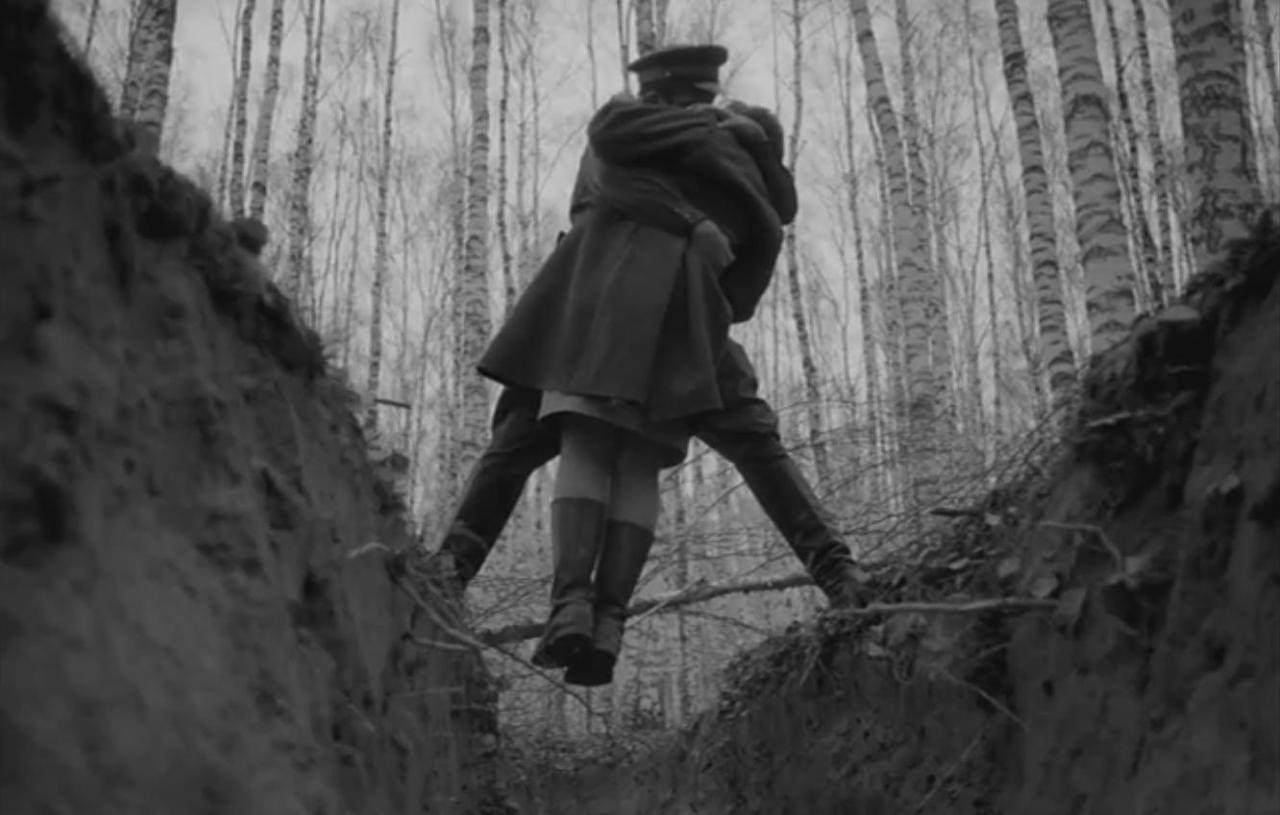
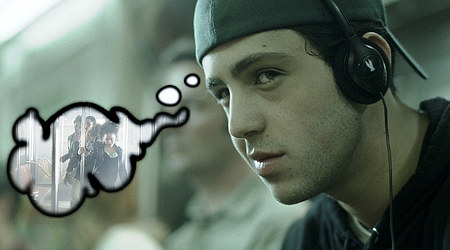
I have experienced many works of art that depicted the horrors of war and how horrible it all is, so the subject on its own doesn't really do it for me anymore. If a movie about the horrors of war wants to be memorable, it must try to be unique through something else besides just the subject. With Ivan's Childhood Tarkovsky does this, most effectively with some beautiful dream sequences sporadically placed within this tragic film about an orphaned child helping the Russian army in their fight against the Nazi's. The fantasy/dream/nightmare sequences take us inside the head of Ivan and make his childhood experience all the more tragic when we see what exactly he witnessed, what he is now fighting for, and the desire he has to return to a peaceful life with his family.

Those dream sequences give heft to the important, but a bit tired cinematically, subject of the consequences of war. The rest of the movie feels a bit more conventional compared to those great scenes, but Tarkovsky manages to once in a while fill even the more conventional scenes with beauty. It is apparent that this is not a movie Tarkovsky initiated, as the movie is a bit too blunt and straightforward for his more poetic and ambiguous sensibilities, but you can tell that the dream sequences were very much his idea. He shoots those scenes with passion and subtlety, and the camera moves fluidly, it's all much more in line with the Tarkovsky that we know from his later more personal films. His later films are certainly much more impressive than this one, but this one fits well in his oeuvre and takes it's own place in the list of quality movies about the horrors of war and the important consequences it has on the most innocent in society.

Grade: B+

Monday, December 10, 2012

La Jetee (1962)


Director: Chris Marker

 The opening credits of this short film bill it as a "photo-novel". A fairly accurate description, as the 28-minute film is pretty much completely made of nothing but black-and-white still images. It sounds like it's mostly an experiment in form and that the still image format is just some experimental gimmick, but this film actually works brilliantly on every level. The still images bring cinema back to its roots. Cinema is basically a bunch of photos shown in quick successive motion (24 frames a second usually), so this film just does it all in much much slower motion and proves that it is the illusion of movement that creates the illusion of linearity that makes film so powerful as a format. Director Chris Marker then equates that with how our memory works, which directly ties into the subject matter of the film, which is time travel.

The main character of the film has a strong memory, an image of a woman he once saw before the world had been destroyed and everyone moved underground, and the strength of that image gives him the mental stamina that allows him to be the perfect guinea pig for a time travel experiment (this film was the inspiration for Terry Gilliam's 12 Monkeys). The movie gives us the poignant notion that memory is basically a form of time travel, that memory is a way for us to back in time while time is really moving forward. It's the perfect story for a film made with still images. Photographs are memories, and for the main character the memory in his head was so powerful that it enabled him to go back in time, just like how movies (photographs in quick motion) can be so powerful that they can enable us to feel like we're going back in time. It's amazing how visceral a movie that has no motion can feel. La Jetee is maybe the most intellectual film about time travel I've ever seen, Marker uses time travel not as a gimmicky plot conceit, but a way to look at the human minds relationship to the world around it. It's an amazing accomplishment that a 28-minute black-and-white film with nothing but still images can be simultaneously about the nature of memory, the nature of time, and the nature of cinema itself.

Grade: A

Friday, June 29, 2012

The Good, the Bad and the Ugly (1966)


Director: Sergio Leone

 On the page this film is basically an average Western, but with Leone's direction it becomes a fantastic piece of cinema that is one of the most memorable Westerns made. This is a film with some spectacular directing. The shot selection and control of tone by Leone in this film is accomplished flawlessly. Leone uses such a wide array of shots, from intense close-ups that show each drop of sweat to wide-ranging shots of desolate landscape where the characters are just specks in the frame, and somehow it all seems appropriate. Then you've got the now iconic music by Ennio Morricone that sets the stage during all the suspenseful showdowns. This is a film that can only be described as epic.

This film is one of the best examples of how a great director can elevate a pretty bland and average story into something with tension and excitement unlike any other. I do like my films to have some greater meaning, and this one doesn't quite accomplish that too well, but it is impossible to ignore the level of talent that is needed to successfully pull of a film like this. Though I'm not saying all the writing is bland, there are some individual sequences in this film that are quite clever. I wasn't quite impressed with the two previous spaghetti westerns Leone did, but this is the one where everything really came together and where Leone's trademark style really comes into fruition for me.

Grade: A-

Saturday, June 23, 2012

La Notte (1961)


Director: Michelangelo Antonioni

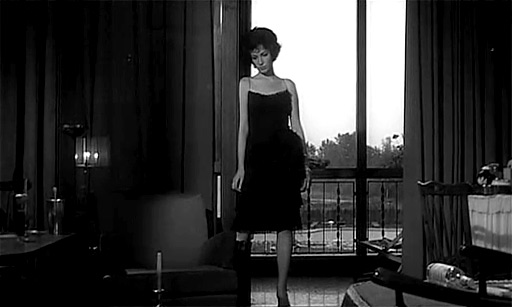
 This feels like an average offering from Antonioni, but even average from him is way beyond so much else. The story is simple and the theme's aren't groundbreaking in any way, but filmmaking and Antonioni's direction is what makes the film as effective as it is. The movie follows an upper class couple around whose marriage is clearly on the rocks. Antonioni has such patience with the two leads and really allows them to find honest moments that speak volumes about where their characters are. The slow pacing can be a little too wandering at times, but the patience is highly respectable.

The story is about the illusion of love in the lives of the rich and comfortable, and how their dissatisfaction is most realized in their love lives. This theme is realized with just one this one couple, so it's a small movie, but like I said, it has some very effective, genuine moments. It's also a very modern movie, especially in regards to the incredibly high divorce rate in the Western world and in the world of the rich. Despite the fact the movie is from the early 1960's, it could have been about people who are living in 2012.

Grade: B+

Wednesday, June 6, 2012

Stolen Kisses (1968)


Director: Francois Truffaut

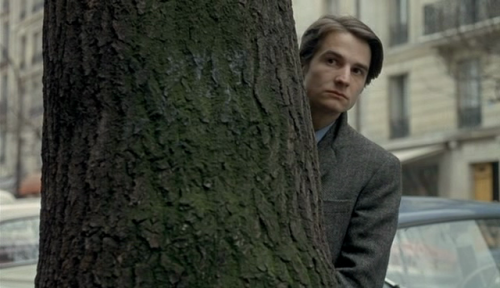
 Previously I reviewed Antoine and Colette, the second film in Truffaut's Antoine Doinel series. This film here is the third. One of the first things that stands out in this film is the performance of Jean Pierre Leaud and how he has so perfectly evolved into the character of Antoine Doinel (or maybe the character evolved into him). His acting, plus Truffaut's writing and directing since the character is semi-autobiographical, all do so much to get across all the ticks and small characteristics that make Doinel who he is.

In this film Doinel is largely the same person he was in The 400 Blows and Antoine and Colette, but in a much more adult world. Once again Doinel is a guy who just can't find his place in society. The way he goes from job to job, and from young woman to old woman in the movie is proof of his inability to have a stable life. Doinel just can't find where he's supposed to go in society, and it's a theme that I believe many can sympathize with in some way. While there are many great comedic moments, ultimately the film is once again a tragedy in which we feel bad for Doinel and blame society for being so uninviting.

Grade: A-

Antoine and Colette (1962)


Director: Francois Truffaut

This is just a short 30-minute film which continues the story of Antoine Doinel who you may remember as the main character of Truffaut's first film, The 400 Blows. In this short film, we see Doinel as he experiences love for the first time. On its own, this film is not all that special, it's just really a well-made short film about a guy who falls in love with a girl who may or may not feel the same way, quite simple and nothing unique really. But seen in context with knowledge of The 400 Blows and Doinel's character, the movie takes on much more emotional resonance. It becomes a tragic love story of a kid who just keeps getting the short end of the straw, and because of that we really get invested in the character and sympathize with his troubled life. Doinel couldn't find his parents love, and now he can't find a woman's love.

Grade: B

Monday, April 23, 2012

Playtime (1967)


Director: Jacques Tati

I guess technically this film is a comedy, but I am absolutely positive that there is no other comedy like this one. This is a film that is a satire against the modern urbanization that makes the world an impersonal place filled with blandness and a machine-like lifestyle for everyone. It also displays the illusion so many of us live in, our pre-conceived cultural and societal notions that bar us from seeing the negative effects of urbanization and globalization.

It's a very long movie that is composed of many gags and individual scenes rather than one straightforward plot, but it's the images that do so much of the storytelling. The film was shot in 65mm, and the widescreen compositions are immensely detailed and choreographed. This film uses the visual image better than almost any film I've ever seen. There is hardly a main subject on the screen, rather, everything going on in the frame is important, even in the corner of the screen. There is an extraordinary amount of details filled in one image. Playtime is an absolute masterpiece that I will definitely be seeing again. It is a highly ambitious film with very elaborate sets, and it all plays amazingly well.

Grade: A

Saturday, April 14, 2012

L'Avventura (1960)


Director: Michelangelo Antonioni

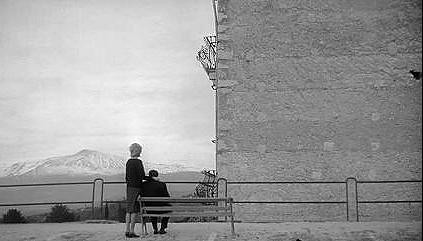
 The central mystery in this movie is the disappearance of a woman. But midway through the movie, that mystery is totally abandoned, but in a way, we get to see the type of life that may have motivated the woman to disappear in the first place. It's a movie about the alienation of the rich and privileged. Instead of criticizing the whole elitist culture like so many other films I've reviewed recently have done, this film takes a look at the rich and privileged on a more individual and sympathetic basis.

It doesn't let them off the hook, but it shows the existential crisis that their privileged, but boring, lifestyle brings. The main character, Claudia, is the one who most undergoes an existential crisis, and the brooding and internal crises that she goes through are realized brilliantly by Antonioni. All of her feelings come across due to the patient pacing of the film and especially the meticulously composed shots. This is a movie that uses visuals exactly how they should be used in film, not just as beauty, but as beauty that tells us who the people in photos are.

Grade: A

Friday, April 6, 2012

Contempt (1963)


Director: Jean-Luc Godard

 This film was Godard's first, and only, relatively big budget film with star power. Bridget Bardot stars in the movie, but Godard makes us ultra-aware of not only her star persona, but the big budget nature of the movie. He takes on commercial filmmaking while making a commercial film, and one of the ways he does that is in the opening scene, which plays on Bardot's physical beauty and his producers requests to objectify it. He also parallels his own story with the director of the film-within-the-film played by Fritz Lang (playing himself). The main character is also a screenwriter worried about selling himself out, but needing money.

But the movie still works as a pure emotional experience as well. The break up between the two leads is one that is done thoughtfully and authentically. Almost the whole second act takes place in an apartment where an argument between the couple is taking place, and while that scene is unusually long, it feels completely honest. Both of them have real problems that real people would have, and the way they argue is also completely accurate in the way that they are arguing but do not completely hate each other. Godard proves himself with his ability to capture genuine emotion and issues, but also can comment on commercial filmmaking with his experimental filmmaking techniques. It is a marvel to watch.

Grade: A

Tuesday, January 3, 2012

Filmcap: The week of Nov 6-13


Breathless, Breaking the Waves, and All About My Mother are some of the movies from this week. The first two are masterpieces and if you read the reviews of those films will have you read about why the famous jump cuts in Breathless actually add to the subtext of the movie and why Breaking the Waves is one of the best examples of an great ambitious film done on a small budget while also featuring one of the best performances of all time. Also in this post is what I believe to be two of the most under-appreciated films of 2011. 

Monday, October 31, 2011

Filmcap: The week of Sept 25-Oct 2


Repulsion, Viridiana, and My Night at Maud's are some of the highlights from this quality-filled week. You've got classics from Luis Bunuel, Eric Rohmer, and Roman Polanski. If you're a fan of Catholic guilt and religious confusions then you'll love the first two movies in this post. You'll also find a review on my one and only 2011 documentary I've seen so far and also a review on one of the few British TV shows I've seen. 

Friday, October 21, 2011

Filmcap: The week of Sept 18-25


Blue Valentine, Last Year at Marienbad, and A Streetcar Named Desire are highlights from this week. Yes I finally saw Blue Valentine and yes it's very good. In this post you'll find discussions on what is subversive in old Hollywood movies, conflicting emotions when a well-intentioned movie doesn't succeed, and how an artsy pretentious movie can still be a masterpiece.

Monday, September 12, 2011

Filmcap: The week of Aug 21-28


Highlights from this week are "The Wackness" and the surprise of 2011, "Rise of the Planet of the Apes." This week's post marks the start of the school year and with that, more movies every week. I usually have one new movie a week that I review for The Daily Evergreen, but this week I saw a film on a Sunday opposed to a Friday or Saturday and so "Rise of the Planet of the Apes" is in this weeks post as opposed to last week. Included in the reviews are discussions on the paradox of a movie about how important books are, and the importance of authenticity in the effectiveness of a familiar story. 

Tuesday, May 17, 2011

Filmcap: The week of May 1-8


Yes I am still very behind on these, you should probably get used to that now. In this post I include a great TV show that I've now caught up with, a spaghetti western (right when "Community" had their spaghetti western episode), a Woody Allen film, and brand new superhero movie of cosmic proportions. 

Friday, May 6, 2011

Filmcap: The week of April 24-May 1


Still a few days behind with this one because of finals, but they are now over thankfully. Finals are also why only 3 movies this week and expect something of the same for the next filmcap. This week though does feature a nice variety. A colorful Spanish film, a black-and-white American film, and a samurai Japanese western. 

Sunday, May 1, 2011

Filmcap: The week of April 17-24


So I am officially about a week behind on these because of finals. Though I think I'll be able to catch up soon once finals die down. This week I finally finish Band of Brothers, some Italian World War II stories, one very artistic Iranian film, one very Hollywood-ish Iranian film, and two movies about bank robberies.


Thursday, April 7, 2011

Filmcap: The week of Mar 28-April 3


This week saw my second pre-Annie Hall Woody Allen movie in two weeks, a 1990 movie that feels very much like a Woody Allen movie, a very stylish French noir, a violent Korean movie, and newly released 2011 film. I've also been watching the HBO miniseries "Band of Brothers," when I finish that I'll review that in one of these as well (probably in a week or two).

Monday, February 7, 2011

Filmcap: The week of Jan 30-Feb 6


This week somehow happened to a pretty good movie watching week with four legitimately great films, one Polish, one British set in Australia, one French in English, and one French and Austrian in French. The two not as great movies were (coincidentally?) both American and both big Academy Awards winners, though admittedly one of which, as you'll see below, was actually pretty good. Read all about it.

Tuesday, February 1, 2011

Filmcap: The week of Jan 23-30

(Could be a picture taken this week, but it's actually a still from a freakishly relevant movie made 40 years ago)

I watched two Italian films this week, one that features an American actress playing a Russian speaking Italian, and the other features no Italian at all, only French and Arabic. I also watched my third John Ford film thus far, the breakout dwarf movie, and a very unique addition to the growing neo-noir genre. 

Tuesday, January 11, 2011

Filmcap: The week of Jan 2-9

I decided to start this so I can practice my movie writing skills. It will usually be recap of the films I watched in the past week, so basically, a Filmcap.


The Fighter (David O. Russell, 2010): I found this to be really heartfelt and entertaining drama about family dynamics. It has some issues with where the emotional focus is and where the movie focuses. Christian Bale's character, Dicky Eklund is more compelling than Mickey Ward and because Mickey has more screen-time that distinction is even more noticeable. I also thought the soundtrack was a missed opportunity. It used a lot of famous songs that come with pre-conceived associated feelings. The movie could have done better in picking songs that would accentuate the emotion in the film instead of using the emotions we have associated with the songs. But the movie's a refreshingly unpredictable sports movie that's very funny and feels very real, a lot of that in part to Christian Bale's performance, easily one of the best of the year.
Grade: B


The King's Speech (Tom Hooper, 2010): This one impressed me a lot because the story could have been done in a really cheesy and predictable way, but the movie ended up being actually legitimately emotional and exciting. A large part of that is because of how invested the movie gets us in Bertie's life. In getting to know his situation and character the speech impediment he has becomes much more than just embarrassing, the stakes are more emotional. One of my favorite things about the movie was also the visuals. Tom Hooper seems to be really great at blocking and composing images in the frame. Every frame looks like a professional photograph because of the set direction and especially where everything is placed. There's also a really cool fish-eye lens thing he does once in a while which gets us real close to the characters.
Grade: A-


F For Fake (Orson Welles, 1973): This is a really unique documentary/video essay that raises some really interesting questions about the authenticity of art and the overall nature of art. Orson Welles makes the movie in an incredibly unique way, he uses reenactments, interview footage, and short fictional segments to tell the story. Sometimes it's hard to make sense of what's happening because the editing is so fast and insane. This is a film that is definitely built because of the editing. A few times he intercuts footage of two separate interviews to create a fascinating narrative. Welles himself even is sitting in an editing room when he's narrating the movie. Even if you can't handle the weirdness of the movie, you won't forget it.
Grade: B+


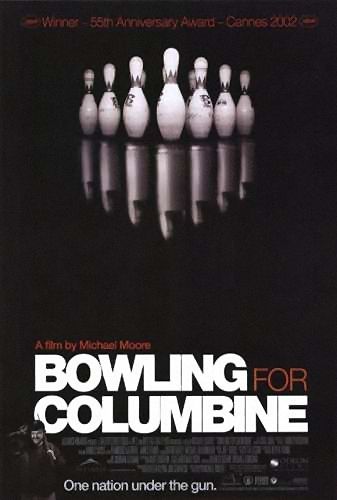
Bowling For Columbine (Michael Moore, 2002): Michael Moore is a guy with big ideas, and a lot of them. He seems like a genuine person who wants to make the country a better place, and I respect him for that, but that doesn't mean he's perfect. I think this movie is one of his most interesting ones and it raises a lot of great points. I liked that he focused on the violent nature of America, and didn't necessarily say it's because we have so many guns. While he asked great questions and raised really good points about our violent nature and gun control, he didn't necessarily give me any lasting answers. He made me ponder about a lot of these issues and I do consider that an achievement, but the film is not necessarily the cure for our ills. Though I don't know if Moore wanted to singlehandedly cure us, he knows he probably can't, so I think he's happy that a lot of people watched the film and started thinking about the issues.
Grade: B


Marie Antoinette (Sofia Coppola, 2006): I felt the goals of this film were to create a stylish, familiar-yet-unfamiliar world while showing the real issues Marie Antoinette went through and debunk many of the misconceptions about her. I feel like the film succeeded with those things. It's definitely a stylish film that is a joy to watch and behold. All the production values are very impressive. It's very unique in the sense that it tries to be historically accurate in terms of the sets and costumes but not the dialogue or acting. That decision did not bother me, I was taken aback by some of the music when watching it, but after it's all said and done the films overall message is what stayed with me and the music, acting and dialogue helped that message. One of the only real flaws with this film is the handling of the politics. There has to be politics in this story, but the way Coppola did the film was very apolitical and so when the political decisions come around the effect they have aren't great. I've seen every film Coppola has done except her new one, "Somewhere," and I've been extremely impressed with her sense of style. Even with this imperfect film, she's turned into one of favorite filmmakers working today.
Grade: B+


Mother (Bong Joon Ho, 2010): This very personal murder mystery is brilliantly crafted in the sense that it plays with your expectations and keeps you captivated. Like a woman, it leads you on and when you think you've figured it out it then suddenly goes in another direction and does it all over again. The conclusion does not disappoint and is really well done. If you're looking for an entertaining, captivating, and personal murder mystery this is a great choice. Kim Jye Ha, who plays the mother character is also very impressive in this film, always convincing, even when she does some very surprising things you wouldn't think an old lady like her would do, but then that's exactly what this movie is about, a mother doing anything she can to save her son.
Grade: B+


Shutter Island (Martin Scorsese, 2010): I watched this back when it came to theaters and I liked it a good amount and was curious to see how it would hold up to a second viewing. Someone told me the movie was worse the second time, and then I also heard it was better. After seeing it a second time, I can say that Shutter Island was definitely even better the second time. Once you know the actual plot the film becomes something more than just a plot-based thriller. It becomes an intense psychological character study of a deeply disturbed but very interesting character. I still think this is Scorsese doing a B-movie, but a B-movie directed by one of the greatest directors of all time is still going to be pretty damn good. Scorsese did everything he could with this plot, including infusing it with a creepy atmosphere highlighted by the awesome Kubrickian music choices.
Grade: A-


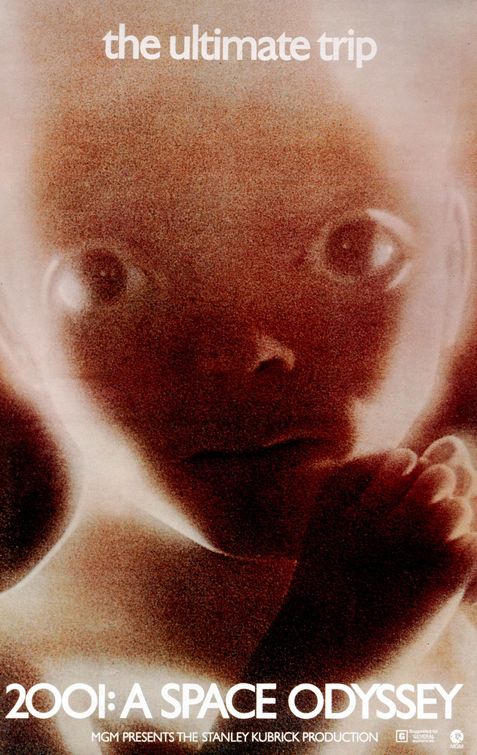
2001: A Space Odyssey (Stanley Kubrick, 1968): Speaking of Kubrickian, here is Stanley Kubrick's best film. I don't think I can add a whole lot into the conversation about this film, but I think it's worth pointing out that more than 40 years later this film is still one of the most unique films in cinema history. I think most of that is due to the fact that no one can really replicate what Kubrick did without copying what he exactly did. Certainly many films have been influenced by "2001", the music of "Shutter Island" and the beginning of "There Will Be Blood" being recent examples, but none have really taken the approach to science fiction 2001 has. Darren Aronofsky's "The Fountain" is the lone film that tried and more or less succeeded in making science fiction that's not just tech-based, otherwise the only film that I can compare to "2001" is Andrei Tarkovsky's "Solaris." I'm looking forward to Terrence Malick's "The Tree of Life" because from the little information I have about it, I get a very 2001 vibe to it in terms of the big ideas it seems to be playing with and certainly the imagery in the trailer. It's been hard to keep my expectations low for that movie. In regards to "2001," I believe this is my third start to finish viewing of the movie and it's simply one of the finest achievements in cinematic history and quite easily the best science fiction film and one of my favorite films of all time. If I was forced via waterboarding to name my single favorite film of all time, there's a good chance I would say "2001."
Grade: A (there is no such thing as an "A+" in my gradebook)