Showing posts with label 2000's. Show all posts

Wednesday, January 23, 2013

Curb Your Enthusiasm: Season Two (2001)


Creator: Larry David

The chain reaction humor, the miscommunications, the victim of circumstance, all those elements that were at play in the first season of the show are once again on full display here in the second. In some cases they're refined and done even better, but most importantly there are some stakes that are introduced. Larry pitches a TV show with Julia Louis-Dreyfus and his actions during the show actually have consequences for how those pitch meetings go, which is to say not well. There is real damage done to his career and personal relationships. Now the show is still very episodic, as the TV show pitch plot comes and goes, and there's not much of a serial narrative.

The show still is a joy to watch just because it's quite expertly plotted, though the structure is a little familiar now, and so we're pretty sure that the odd thing that happened to Larry in the beginning of the episode is going to come back to bite him in the ass later on. One particular episode that stood out was the episode with Shaquille O'Neal. That episode was special because it introduces a new experience in Larry's life. We've been seeing the same side of him for the whole show but that episode we see a different side, a side that is satisfied with the worlds reaction to him. He finds himself in a situation in which he doesn't have to deal with people anymore, and he loves it. I definitely hope for more adventurous episodes like that one in the future. It's a hilarious show that I think has the potential to be even better.

Grade: B

Friday, January 4, 2013

The Wire: Season Five (2008)


Creator: David Simon

Lets get this out of the way first, if I had to rank each season of The Wire I would pick season four as the best and season five as the worst. But even the worst season of this show is better than almost anything on television right now. That just goes to show how great this series is, and why it's justified when people say that this show is the best ever. This final season had a few goals. The first was to bring in the institution of journalism in the world of The Wire, a profession that creator David Simon knows a whole lot about since he was a Baltimore Sun reporter before he started the show. The media is an appropriate focus for the shows final season because the media is the middleman between the people and the governmental institutions and what keeps the people from knowing about the failures of those institutions. Simon shows us why the media is as guilty as all those other institutions when it comes to the question of why nothing ever changes. The media is just another cog in the machine, being oiled by the same forces of surface-level achievement and personal success.

The second thing the season did was to give us another Hamsterdam-like solution and then shoot it down. This time we see that even when we have good people in office, getting resources to where they belong can be difficult, and so we observe what kind of drastic things need to happen in order for those resources to come. We see McNulty invent a ridiculous fake serial killer in Baltimore, but it's quite tragic how serious he needs to make it and how he needs to sacrifice his whole career in order to get the resources to fix the real problems. That reflects a theme that The Wire has advanced over and over again: The individual gets devoured by the institution. Doesn't matter if the individual does the right thing or the wrong thing, they will get devoured. It all also ties into the lies that fund all of these institutions. The newspaper gets a chance to win Pulitzer's because of a reporters exaggerations and lies the same way the police department exaggerates stats to fake success and maintain funding. The third and final thing this season does was to meticulously craft and conclude the stories of all these characters in a way that ends in mostly the same way it all started. That's the conclusion that Simon wants and that's what he shows. Despite all the strong idealistic individuals, everything is cyclical, and everything stays the same. The game is the game, and the game will always stay the game.

Grade: A

Wednesday, December 19, 2012

You Can Count on Me (2000)


Director: Kenneth Lonergan

 The one thing that stands out the most from this quiet drama is that its central relationship is a brother-sister relationship. When I saw this I realized that you just don't see that very often in art. You don't often see an honest brother-sister relationship be the central relationship in pop culture. When you see an honest real-life relationship expressed on film, it all becomes so much more captivating. Voyeurism is a big reason we watch movies, and when we see something that feels extremely real we get drawn in. On top of that, the writing, acting, and directing by all involved are top-notch. Each actor, Laura Linney and Mark Ruffalo (and even the son) are amazingly honest in their roles and by the time one of the characters recites the title of the movie to another towards the end of the film, you are incredibly attached to these characters

The filmmaking on display is unobtrusive and realist. It's a movie that tries to feel honest above everything else. It's not a flashy drama, neither is it that ambitious either. The descriptions of the characters aren't too exciting: one is a single mom struggling with her personal life and the other is a struggling 20-something year old guy who's a bit of a free spirit, but it's Lonergan's writing and the great performances that make these people come to life in a way that is engaging, emotional, and tugs real hard on your heart strings. The theme of the movie is fairly simple (see the movies title for a hint), but it comes across powerfully. You don't get attached to characters like this in movies often, as opposed to TV characters, mostly due to lack of time in fleshing them out. But with this film, I reached the end of it feeling like these siblings were part of my own family.

Grade: A-

Tuesday, November 27, 2012

The Brothers Bloom (2008)


Director: Rian Johnson

 At this point, it's pretty difficult to make a unique con film because the genre itself has with it a set of expectations that make it difficult to do anything new (Inception is the only unique recent heist/con film that comes to mind). The main expectation for the audience is a clever plot/con, and that must be the first priority. The Brothers Bloom tries to stand out by adding a unique sense of style to the con film, with some commentary on truth vs. fiction and whether a life is written or unwritten. What it succeeds at is the style, and while the themes are ambitious and refreshing, they don't quite come together at the end. There are hints of a greater movie that does much more than your average conman film, but it doesn't quite reach that height and director Rian Johnson seems to buckle under the weight of the convoluted plot.

The reason to watch this film though is clearly the fun stylistic flourishes that exist mainly in the first half of the film. The opening scene, showing the two conman brothers as children, is absolutely brilliant and is as good as anything in a Wes Anderson film. The film never really lives up to that beginning, but the characters are fun, quirky, and likable the whole time. The relationships between the characters are also important, and those are hit & miss. The romantic friendship between Adrien Brody's character and "the mark" of the con, played by Rachel Weisz, works well and you feel their connection. But the more important relationship, which is between the two brothers, Brody and Mark Ruffalo's characters, doesn't quite come together the way it's supposed to. The last third of the film relies on this relationship heavily and this is one of the main reasons I lost interest in that last third. The problem with long cons is that they can get quite complicated, and if there's no strong emotional anchor it just feels kind of pointless, and that's what happened in this movie.

Grade: C+

Curb Your Enthusiasm: Season One (2000)


Creator: Larry David

It was hard for me to figure exactly what this show was trying to do in its first season, but it was certainly funny and showed potential. Larry David plays himself, and he plays sort of a social observer role poking fun at social norms. His character is in the vein of Woody Allen, but without the personal stakes that Allen had in his films. David shows great talent in plotting episodic TV comedy, but I found his character mostly one-note, because unlike Allen's films, there wasn't much at stake. This is a show though that has gone on for many seasons, so I would not be surprised to learn quite a bit more when I see more episodes (and similarly I can't imagine a show like this going on for 5+ seasons without stakes).

The average episodes basically seem to unspool a yarn of unfortunate events that occur due to unforeseen events that unfold due to usually some innocent action that David did. It's the classic comedy of chain reaction. For example we might see one very subtle racist comment that David makes becomes so much more by the end of the night, affecting his wife's health. Even though the dialogue is improv, the plotting sure isn't, and the plotting is done very well and seems almost effortless which is remarkable considering the planning that has to go into writing these types of stories. What the show does well this season is establish a tone, and a feel for who David is. I hope the subsequent seasons do better in creating cohesive stories that actually affect David's life more substantially.

Grade: B-

Sunday, September 23, 2012

The West Wing: Season One (2000)


Creator: Aaron Sorkin

 Spending my summer interning on Capitol Hill in Washington, DC seemed like a good time to start watching this loved and popular Aaron Sorkin show about the minutiae of daily life in the west wing of the White House. There are a handful of main characters, all of whom work for the President of the United States. In true Sorkin fashion the characters are definitely idealistic, but the show recognizes that the world they occupy is not a world of idealists. I was most impressed with the fact that the show is not afraid to display the characters struggling to get things done the right way. It's the ultimate conflict between compromise and principles (Sorkin's new show The Newsroom mostly fails at this, but more on that in another post). Throughout the season the main arc seems to be this battle between playing it safe to stay alive and taking risks by doing the right thing. It's a conflict that's been present for as long as politics has existed and Barack Obama is proof that it's definitely still a huge issue today.

One of my best ways the show displayed this conflict was the personal issues of the staffers. Sam Seaborn loved a call girl, and even though there's nothing wrong with that, it's still going to be a problem because of how it might be viewed by the press. Another great thing the show did is make sure the personal stories and personal relationships of the characters were focused on the effect they had on the job they were doing. This is a show about the job these people are doing first, and the people who have the job second. We see the negative effects the time and energy the important job has on the personal lives of the characters (though I wish we would have seen more of this). While the conflicts in the job is shown very well, I do think the characters are a little too-good-to-be-true. This is most evident when it comes to President Bartlett. There are a few moments where he does things that make him out to be some Gandhi-like figure. There is a scene early in the season in which the President lets his emotions get the best of him and almost orders an attack on hundreds of innocent civilians, and I would have liked to see more of that side of the President. But I will say one thing, all of the characters on this show are incredibly likable, and because you enjoy spending time with these people it makes it so much easier to watch the show. You'll know what I'm talking about when the season-ending cliffhanger occurs and you find your heart beating a million times an hour.

Grade: B+

Friday, September 14, 2012

The Wire: Season Four (2006)


Creator: David Simon

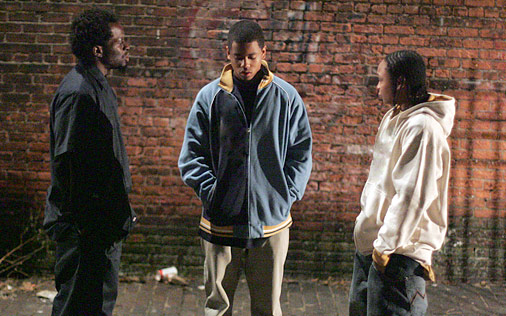
 After three seasons in which the scope of the urban American problem was expanded each season, the fourth season of The Wire takes a few steps back and shows us the root of the problem. It all begins with the children on the street. Maybe you were wondering what all the gangsters on the street did wrong as kids to get into this situation. Why did they end up on the corner with drugs and a gun? And why can't one of these kids just focus, go to college, and make a life for himself? Well here is your answer. These kids are smart, clever, good-hearted, and innocent, but the environment they live in draws them into the harmful sludge of urban society. It's not even that these specific kids were at the wrong place at the wrong time, because the thing is, every kid in their neighborhood is in the wrong place at the wrong time. The fates of these children were planned since the day they were born.

The season follows four kids, all of whom take very different paths that seem to end up in places not too far from each other. They all display a potential to do something, to be something more. But if you've seen The Wire you know not to expect a happy ending where one of the kids from the ghetto grows up to be that astronaut he always wanted to be. But the show doesn't shy away from showing success, we see a relative win with the fate of one of the kids. But even then, we see how the system makes that success so much harder than it needs to be. The ending of this season will have you in tears, and it won't be because of some kid having a cathartic breakdown or someone dying, it will be because of the overwhelming sensation that comes over you in which your emotions finally take in the realization about how messed up everything is. It's a feeling that I've honestly never had before watch any TV show or movie. I've never felt a grander sense of tragedy than I did when I finished season four of The Wire. This is why that out of all the great seasons of The Wire, this season is the greatest.

Grade: A

Wednesday, July 25, 2012

The Proposition (2005)


Director: John Hillcoat

 When we think of a western, we usually think of the old American west, but this great western is set in the barren lands of old Australia. The landscape is similar to the landscape of American westerns, but instead of Native Americans roaming around, you have Australian aboriginals. The best westerns are always the ones that manage to capture the desolate landscape and the effect the never-ending land and its savagery can have on people (last years Meek's Cutoff is the most recent film to capture this successfully). John Hillcoat directs this film paying close attention to larger thematics and dilemmas instead of focusing primarily on screenplay, which could have easily been made into a by-the-numbers action-western by another director.

Guy Pearce's character has a moral dilemma, and that is whether or not he will kill his wanted older brother for the sheriff in order to save his wanted younger brother who has been captured by the police from death. The film never takes a side morally. Even though Pearce's character and his brothers were involved in a horrible massacre of an innocent family, it's not easy to root against them because we see that the colonial police can be just as brutal. Flies, the insect, fly all over the place when we see the police, perhaps to symbolize that the "good guys" are just as "dirty" as the criminals. On top of all that, Nick Cave's music (he is also the screenwriter) makes the movie meditative when it needs to be and extremely exciting it when it needs to be as well. The music combined with the brilliant cinematography and Guy Pearce's great performance makes for a movie that's more of an experience than anything e lse. The screenplay is good, but it's simple. Hillcoat then takes the simple story and creates an emotional and even exciting film.

Grade: A-

Thursday, July 19, 2012

The Beat That My Heart Skipped (2005)


Director: Jacques Audiard

 A French crime film that happens to be a remake of little-known American film from the 1970's, when a movie has that description, it's bound to be at least worth a watch. This is the film Jacques Audiard made before A Prophet, a film I believe to be a masterpiece, and it's obvious after watching this film that A Prophet represented Audiard reaching the top of the potential he shows in The Beat That My Heart Skipped. The movie is very well-made, there is some raw filmmaking and also some very raw acting by Romain Durais. Both Durais and Audiard are the ones who deserve credit for creating such a raw and gritty film that really works, despite the fairly standard and sentimental story.

The story is right out of The Godfather, a young man whose family is involved with crime would like to get out of the criminal world but his responsibility to family ends up making it difficult to do so. In this film it's made even more obvious and sentimental because our protagonist wants to be a piano player, the complete opposite of a guy who hurts people for money (it's a little too on the nose). The issue of filial responsibility is what is most interesting in the film. It's been done before, but this film adds an interesting aspect with the introduction of the debt concept. Your parents took care of you, you have to take care of them, and that's even if they get into hurting people for not paying them back. You can see the irony and that the theme of debt is quite clear. Even though the ideas in the film are not very unique, the film is well done enough to make it a quality piece of art.

Grade: B

Saturday, June 16, 2012

Crimson Gold (2003)


Director: Jafar Panahi

 This film is Iran's Taxi Driver. Or maybe it is Iran's The Wire. Who knows, I just wanted to start this off with a hyperbolic generalized statement to get your attention, and now I have it. The point is that Taxi Driver is one of my favorite films of all time, and The Wire is one of my favorite television shows of all time and so I don't compare to them lightly. But I won't compare them, because this is because this film is a masterpiece in its own right. It is a movie that reveals the motives of those "second-class" citizens who are quietly fuming at the world. The lead character in this film is so tired of being treated like he is not as important as other humans who have more money. But in the film he is not asking to be rich, he is just asking for respect, and his anger represents so many around the world.

His realization over the course of the movie of how tragically static his situation really is shows how society as a whole, and not just in Iran, can be unfair to those who may not have the money necessary to have their voice heard. There is much dread in the film, because we know from the opening flash-forward in which he is involved in a robbery gone wrong that this will be a tragic story. But that dread adds poetry and meaning to the rest of the film. The lead performance is one that is very subdued, all of his feelings are deep inside and he never ever shows them. His anger is slowly boiling to the top, but we only know this because we know his sad final actions. Crimson Gold is quiet and angry at the same time. Written by the great Abbas Kiarostami, the screenplay has the subtle characterizations that he is known for, always keeping the audience just enough at bay. Director Jafar Panahi adds his trademark social critique and sense of social justice. Both of them team up to make a film that has a flawless sense of character, justice, class, and emotion.

Grade: A


Monday, June 11, 2012

The Wire: Season Three (2004)


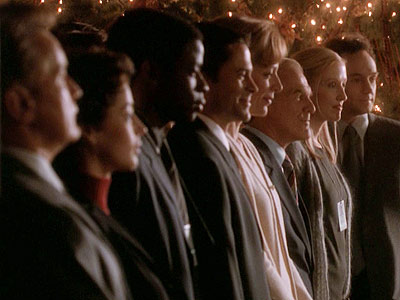
Showrunner: David Simon

The Great American Tragedy. That is what The Wire is about. The seasons of the show I have seen so far have all expanded the scope of the show and evolved it into not just a show about cops and crooks, but a show about all the reasons urban America, and by extension America and maybe even Western civilization in general, are in decline. The third season the scope expands up into the political world and into the dealings of the most high up in Batlimore. It is used to comment on the tragic fact that how the higher up you go in the system, the more difficult it is to reform the system. The main theme of the season happens to be reform, and how difficult it is. The first two seasons laid out the problem very well, and then this season shows the potential solutions to those problems but how implementing those solutions are not so simple.

We see attempted reforms on both the police side and on the drug side, and how in both systems the traditionalists and a variety of external societal factors inhibit the reformers from successfully implementing those reforms. The "hamsterdam" plot, in which a lieutenant creates an area of the city in which there will be no drug enforcement is a brilliant story-line. That whole plot is policy analysis at its finest, examining the factors and repercussions of realistically implementing such a policy, and what needs to be done in order to actually have it succeed. Ultimately it's a tragic story-line because it's a great idea, but the climate of modern society doesn't allow it. But the true brilliance of The Wire lies in the fact that everyone is in a gray area, even those who are trying to do right in the world. Even those who genuinely want to right the wrongs of the world are shown the negative consequences on their colleagues and their boss' when they go against authority trying to do the right thing. Once again, just like all prior seasons, we see the complex nature of the world in all is ugly glory.

Grade: A

Friday, June 1, 2012

K-PAX (2001)


Director: Iain Softley

I reviewed the Argentinean film Man Facing Southeast not long ago, and this film is sort of the American remake (though not officially). This film has the same basic plot, a mysterious man is found in a mental institution claiming he is from another planet. Instead of being a religious allegory, this film is completely straightforward. The sci-fi aspects are a focus during one section of the film, but the final third of the film is much more of a psychological drama. Either way, the movie is not all that good.

The film does a fine job of exploring the relationship and between the patient and the doctor, but the other patients in the hospital become quite important later in the film and their relationship with Kevin Spacey's mystery man is not explored as much as I want to. Much of the film also feels cliche, which is why this film is more of a good family movie than a good movie movie. It's not completely cliche overall, but there are plenty of moments that had little to no effect on me, and if the moments don't work then the whole won't either.

Grade: C-

Friday, May 4, 2012

Battle Royale (2000)


Director: Kinji Fukusaku

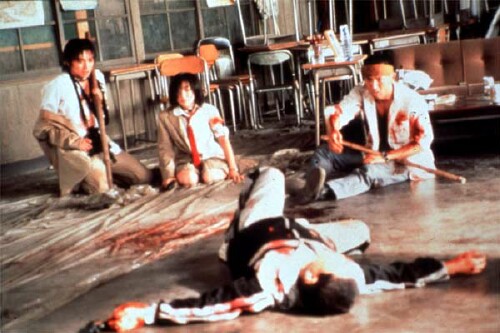
Regardless of any sociopolitical subtext, whenever you've got a movie featuring 13-year-olds brutally killing each other, it is going to be a cult classic. Battle Royale is extremely violent and has got compelling plot that never fails to keep your attention. Kids fight each other with all sorts of weapons and engage in all sorts of survival techniques, it is certainly fascinating. But there is also some great subtext about the divide between the world of adults and the world of children. The plot of the movie represents the disdain the filmmakers have for the inhumane dog-eat-dog world of adults, especially in a time of economic woes, such as the time Japan was in when this movie was made.

The actual details of the premise and plot are sometimes thin, which is not a flaw. Too much backstory would have taken away the allegorical quality of the plot, but there is some unclarity in the end that I would have liked to see improved. There's also a whole lot of unnecessary teenage melodrama, and much of it focuses on a select few characters making the question of who lives and who dies very predictable. But ultimately, the movie is extremely entertaining and leaves a whole lot of room for contemplation on the relationship between children and adults.

Grade: B

Sunday, March 25, 2012

The Motorcycle Diaries (2004)


Director: Walter Salles

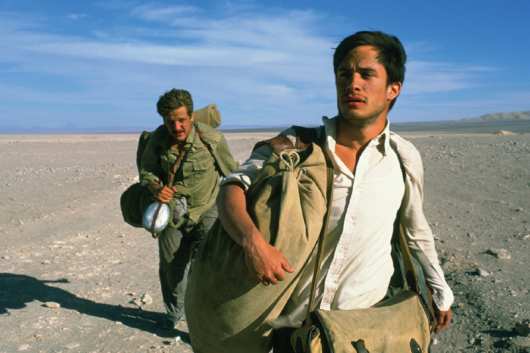
 For most of this movie you would never guess that it is about Che Guevara, the famous Central American revolutionary. Guevara is a young guy who has not formed his political views yet and is about to become a doctor. But on this road trip all across South America, Guevara experiences a sort of political epiphany. The movie is almost like a political coming-of-age story. Much of the movie is like your typical road trip movie. We see Guevara and his friend struggle through the weather, mechanical breakdowns, and all sorts of shenanigans.

But there are also times when Guevara is talking to the economically-depressed people in the rural areas of South America, when the movie is shot documentary style as if Guevara were really listening to the stories of the oppressed poor. But those scenes are a small part of the movie. The Motorcycle Diaries doesn't really feel like a Guevara origin story, instead it feels more like the beginning of his origins, and because of that it does feel a bit unsatisfying. The movie feels a bit slight when you consider at the implications the events of the movie will have on the history of Central and South America, but then again that may be the point. Big things can have small beginnings.

Grade: B

Thursday, March 22, 2012

Distant (2002)


Director: Nuri Bilge Ceylan

The thing about showing isolation, boredom, and alienation in movies is that you can't make it too exciting without risking the authenticity of the whole idea. Sometimes it can be difficult to watch those kind of movies, even though the themes and ideas of the movie are conveyed very effectively by the end. This Turkish art house film is an example of that. The film is very slow and revels in showing boredom and urban alienation for all it is, but it still leaves a lasting impact.

We see two men from very different places try to live together, one is going through a very urban existential crisis instigated by the separation from his wife, while the other is going through a different crisis in that he is trying to find a job after moving to the city from a very rural area. These two men must try to live together and try to find a way to reconcile their lives even though, as the title suggests, there is much distance between them. Sometimes the movie feels like it is going nowhere, but it has a depth that feels extremely real and pronounced that reveals the inherent alienation of urban life.

Grade: B+

Wednesday, March 21, 2012

Afterschool (2008)


Director: Antonio Campos

Internet videos have enabled us to see and experience so much more of the world than we had been able before, and Afterschool captures this phenomenon by focusing on one particular event caught on tape that deeply affects a prep school. This is a film that captures the Youtube generation unlike any film I've ever seen. We have a main character who continuously watches videos on the internet, from videos of animals making music to videos of school fights to hardcore porn. But when he accidentally captures a death on camera and experiences it in real life, he is unable to process the reality of the situation.

This is a film with a formalist style worthy of Stanley Kubrick and Michael Haneke. It's cold and clinically shot by a 24-year-old filmmaker who displays an amazing amount of control in his feature film debut. The camera itself serves as a voyeuristic eye similar to the videos at the center of the film. Frames are blocked in a very precise manner, but it seems like there is no sense of blocking because people are always oddly cutoff by the edge of the frame and it makes the movie seem like something captured and not staged. The camera does not move much, but when it does it avoids mobile framing, instead it does not anticipate the movements of the actors, again acting as a voyeuristic eye. All of those visual decisions actually lead up to the final shot, a shot that makes you question the most important person in the room, yourself.

Grade: A-

Tuesday, March 6, 2012

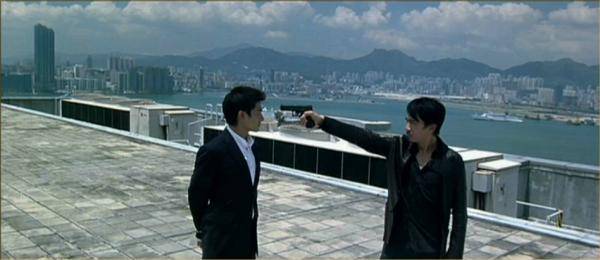
Infernal Affairs (2002)


Directors: Andrew Lau and Alan Mak

I've already seen Martin Scorsese's The Departed, which is a remake of this film, so many of the surprises in the movie weren't all that surprising to me. But nonetheless the movie is wonderfully plotted and paced, and it does actually get into some of the psychological issues of the characters. The two main characters in the movie make sensible decisions, and that difficulty of living a double life for both of  them is well established and not entirely cliche.

While the plot is exciting and well done, some of the filmmaking is actually pretty cliche, and worse, lazy. The music is cringe-inducing at times, and the all-too-frequent flashbacks to scenes we've already seen assumes the viewers are not smart enough to figure the movie out. The movie has got some serious flaws in the way it tells the emotion of the story. But the relatively high level of actual character study in what is essentially a crime picture, is enough to make it worth it. It's not quite as great as The Departed, but it is a movie that can be enjoyed on its own merits.

Grade: B-

Saturday, March 3, 2012

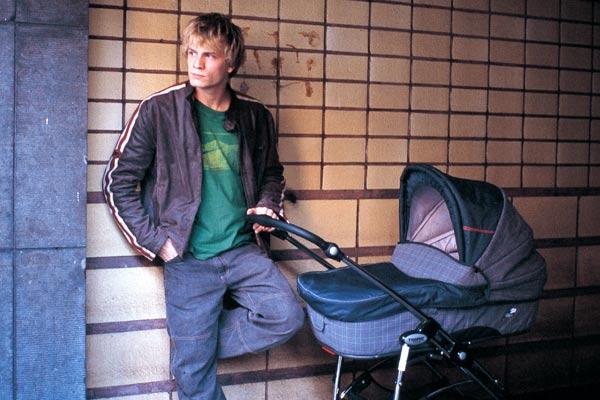
L'Enfant (2005)


Directors: Jean-Pierre and Luc Dardenne

Modern culture has celebrated and encouraged arrested adolescence. This mantra of leaving adulthood till as later as possible. In this Dardenne brothers movie, the other side of that notion is shown. What happens when that type of person first encounters adult responsibilities. Our main character, Bruno, finds himself living in a part of town that is lacking in jobs, and so he usually spends his time doing petty crime trying to make some money. But he then has a child with his girlfriend, and while his girlfriend is similar to him, she seems to have a better sense of responsibility than him now that she's had a child.

The story is a coming-of-age tale for Bruno, but one that is more effective than most because Bruno actually faces real lasting consequences for his rash decisions. Purely as a descriptive term, the movie is bit like Truffaut's The 400 Blows meets Godard's Breathless. Bruno is similar to Michel in Breathless, but what happens to Bruno, and the tone of the movie, is more similar to The 400 Blows. The Dardenne's trademark documentary-like observational approach is used once again very effectively to help give the movie a completely natural feel. It is also important they capture the working-class milieu of Bruno's environment, because that gives us subtle hints as to why it may not be completely his fault as to why he is stuck in this arrested development.

Grade: A-

Friday, February 17, 2012

The Wire: Season Two (2003)


Executive Producer/Showrunner: David Simon

The second season of this landmark show does something I have never seen in a television drama before. After a successful, critically acclaimed, first season that is heavily serialized, the show starts the second season with a completely new story. We revisit some of the main characters, but we are introduced to a brand new story-line in the Baltimore shipping yard with many new characters. But this decision ends up being not just bearable, but brilliant. The first season was about the poverty-stricken predominantly black drug-dealing lower class of Baltimore, but this second season expands by showing how the urban decay effects not just those on the bottom, but also white blue collar workers as well.

The show builds and expands on that first season in a very brave way. Eventually many of our main characters and format of the first season comes into play, but that takes a lot of time to happen. Like the first season, the season takes time to get everything into place, but by the end of the season everything feels completely perfect. The blue collar members of the working class are the ones that have it hard this season, and in a genius move, their connection to the drug trade in the first season is made very clear at the end.

The second season is almost a Godfather-like sequel to the first, in that the first season is a great piece of art in its own right, and the second one expands on the first season and almost equals it. Once again, David Simon created a crime show that actually focuses on the reasons for the crime. When the jobs for the working class go away to other countries, or when their jobs are replaced by technology, where will those workers go? If the only place hiring is the local gangster, they'll do anything to feed and house their families.

Grade: A

Saturday, January 21, 2012

Filmcap: The week of Dec 4-11


Raise the Red Lantern. Certified Copy, and Sideways are some of the films reviewed this week. I continue my catch up on 2011 films and I find one true masterpiece as well as two interesting but a bit standard works. In addition, I check out two films by renowned directors, one American and one Chinese, both with new films out this year. In this post you'll find films about second chances, coming together in the face of hardship, and why authenticity may not matter.