Saturday, April 21, 2012

Downton Abbey: Season Two (2012)


Creator: Julian Fellowes

 The first season of Downton Abbey was filled with strong characters and a pretty compelling narrative for almost each of them. While the second season features many of the same strong characters, the narratives were not as compelling and much more silly. The believability of the plot decreased heavily as Julian Fellowes seems to dig deeper and deeper into the box of generic soap opera stories. Many of the plots were just contrived drama that weren't all that compelling, though at the same time the characters to make them watchable.

One of the more contrived and silly stories was the deformed Titanic survivor whose storyline was so unbelievable and out-of-place I wondered why in the world Fellowes chose to include it. On the other end, the romance between Lady Sybil and Branson was of similar quality to the character arcs in the first season, much more compelling and emotional while also shining a light on the changing times of the setting. Then there's one of the best parts of the show, which is just watching all the characters work together and interact. The overall tapestry of the house and the town they live in expanded during this second season and it helped in making the world of Downton Abbey a place you want to be a part of, even despite the sometimes unbelievable story-lines.

Grade: B-

City Lights (1931)


Director: Charlie Chaplain

I have not yet seen as many silent movies as I probably should have, and if you haven't either then this one is a good one to start with. The length is just right, and while the humor is sometimes dated, the emotions are not. City Lights can get very moving by the end, and as someone who has watched many silent movies yet, the fact that it is as moving as it is without dialogue is very impressive. Silent films represent film at its more pure.

The movie is a romance, and it has an easy-to-swallow story of love transcending class conflict, but it is done so simply and effectively that it really does succeed in being emotional. There are also some great gags that make fun of rich people, and considering the times we live, those gags are definitely not dated. While the movie may not be complex or layered, it has a simple hopeful message and also makes you feel. Simple effective films like City Lights are a rare breed nowadays.

Grade: B+

Saturday, April 14, 2012

L'Avventura (1960)


Director: Michelangelo Antonioni

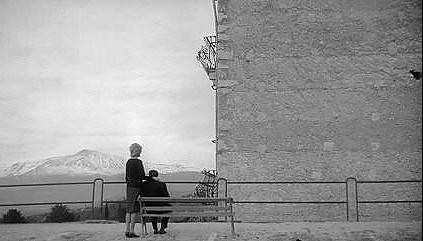
 The central mystery in this movie is the disappearance of a woman. But midway through the movie, that mystery is totally abandoned, but in a way, we get to see the type of life that may have motivated the woman to disappear in the first place. It's a movie about the alienation of the rich and privileged. Instead of criticizing the whole elitist culture like so many other films I've reviewed recently have done, this film takes a look at the rich and privileged on a more individual and sympathetic basis.

It doesn't let them off the hook, but it shows the existential crisis that their privileged, but boring, lifestyle brings. The main character, Claudia, is the one who most undergoes an existential crisis, and the brooding and internal crises that she goes through are realized brilliantly by Antonioni. All of her feelings come across due to the patient pacing of the film and especially the meticulously composed shots. This is a movie that uses visuals exactly how they should be used in film, not just as beauty, but as beauty that tells us who the people in photos are.

Grade: A

Jacob, the Liar (1975)


Director: Frank Beyer

 This is a surprisingly smart film about the living conditions in Jewish ghettos during World War II. I've seen plenty of Holocaust movies now, but this one is surprisingly smart in the way it deals with the question of hope vs. truth. The main crux of the movie is whether or not the main character, Jacob, is doing the right thing by lying about some positive news, when he really has no idea. It is a movie about hope, but it's smart because it also goes into the perils of false hope.

The fact that the movie does show that in the end, false hope is just temporary pleasure to precede disappointment makes this movie better than many other movies that talk about how great hope is. It is a bit melodramatic during parts, when I would have liked it to be more subtle because I think everyone knows how horrible the situation for Jews was. But ultimately it's definitely one of the smarter Holocaust films I've seen. Something to think about is that one way this film is different may be because it was made in East Germany, perhaps adding a perspective fairly unique to most viewers.

Grade: B

Europa Europa (1991)


Director: Agnieszka Holland

 The basic story is quite remarkable, mostly because it's true. A young Jewish boy finds his way into the German army, and while he's young and so that explains why he's so quick to abandon his principles, they do eventually catch up to him. The themes of this story, not movie but story, venture around identity, self-preservation, and violating your mostly deeply held principles in favor of more practical reasons. Though I definitely do not believe this film lived up to those potential themes.

The movie is made in typical Holocaust movie fashion, showing the horrible living conditions and experiences of Jews and making most of the Germans stereotypically evil. But the tone of the film is a bit comedic, mostly because the kid is fairly innocent and so he does not yet know the serious nature of the war. I also must admit that some of the scenes are probably unintentionally light because the lead actor is not all that great, and this is especially true in the end when he is supposed to have learned a great lesson, but there is not much emotional impact. Like many Holocaust movies, this movie is remarkable only because it is based on a true story.

Grade: C+

Thursday, April 12, 2012

Phantom of the Paradise (1974)


Director: Brian De Palma

 A really wacky, silly, over-the-top movie that you can't help but like because its so fun to watch. This is a movie that mixes the genres of comedy, horror, and the musical, while also acting as a tragedy. It references an insane amount of prior work, from Psycho to The Phantom of the Opera to Faust. This movie is the definition of campy fun, I'm not sure if I learned much from the movie or if the movie represents any great artistic filmmaking, but it does represent a wild time.

The themes it has have been done to death, especially the main theme of artistic integrity. And there are scenes that are not campy fun, but just campy dumb. So it's not completely successful, but the unique visuals, musical dances, and costumes do give the movie an other-worldly feel that set it apart from any other movie you've ever seen. The highly expressionistic style is definitely De Palma at his most fun. It doesn't work all the time, but no one can deny that this is one unique film.

Grade: B-

Damnation (1988)


Director: Bela Tarr

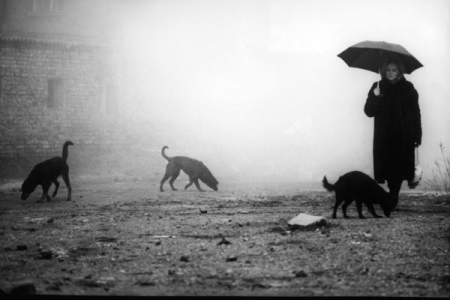
 Set in a black-and-white world that is so bleak and depressing that it almost seems post-apocalyptic, this movie can be difficult to watch. The characters in the movie all have no aim in life and are completely dissatisfied, and the depressed nature of humans is reflected in the visuals and the production design. This is not a movie someone can watch at any moment in time, this is definitely a film you must be in the mood for. It is incredibly well made, the formalist style reflects the films themes greatly, but those themes do not seem to be all that engaging.

But Tarr's style is phenomenal, and the way the gloom and doom of the characters comes across is sometimes brilliant. Animals, rain, garbage, and broken buildings are all used to capture the pointless beast-like existence survival of the human characters, and Tarr's slow camerawork and black-and-white imagery all feels appropriately dark and bleak. I may not have gotten everything I could have gotten out of this film in one viewing, because there are philosophical ideas buried deep within the film, especially through the indirect and sometimes difficult to decipher dialogue. But that promise of something deeper about the human condition will definitely bring me back.

Grade: B

All That Heaven Allows (1955)


Director: Douglas Sirk

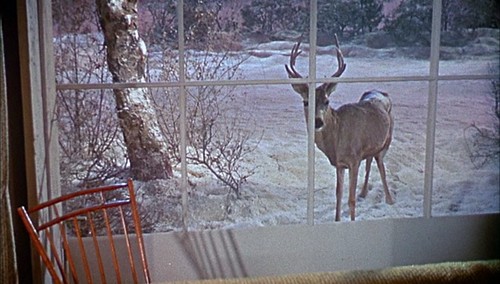
 This is a film that was surprising, because it is an American movie made in the 1950's, and so you would not expect much rebellious subtext. But this is a film that is very subversive and is very perceptive of the ills of social status. The movie combats love vs. social status, very familiar theme in romances, but this movie focuses less on the love between the couple, and more on the unfair social status system threatening to end it all.

I've already reviewed a couple of films that criticize elitist culture in the past few months (The Rules of the Game, Smiles of a Summer Night), and this movie is definitely comparable to those great films. We have heard bourgeoise criticism before in the movies, but rarely from an American standpoint. Another great element is beautiful lush color photography that highlights the melodrama in the situation and the truly tragic nature of the romance. This is a wonderful film that is truly quite surprising.

Grade: A-

Friday, April 6, 2012

Contempt (1963)


Director: Jean-Luc Godard

 This film was Godard's first, and only, relatively big budget film with star power. Bridget Bardot stars in the movie, but Godard makes us ultra-aware of not only her star persona, but the big budget nature of the movie. He takes on commercial filmmaking while making a commercial film, and one of the ways he does that is in the opening scene, which plays on Bardot's physical beauty and his producers requests to objectify it. He also parallels his own story with the director of the film-within-the-film played by Fritz Lang (playing himself). The main character is also a screenwriter worried about selling himself out, but needing money.

But the movie still works as a pure emotional experience as well. The break up between the two leads is one that is done thoughtfully and authentically. Almost the whole second act takes place in an apartment where an argument between the couple is taking place, and while that scene is unusually long, it feels completely honest. Both of them have real problems that real people would have, and the way they argue is also completely accurate in the way that they are arguing but do not completely hate each other. Godard proves himself with his ability to capture genuine emotion and issues, but also can comment on commercial filmmaking with his experimental filmmaking techniques. It is a marvel to watch.

Grade: A

Monday, March 26, 2012

Justified: Season One (2010)


Creator: Graham Yost

 The initial concept of this show, beyond adapting an Elmore Leonard short story, seems to have been to create a western set in modern America. That concept has a lot of potential, but I am not so sure it reached that potential in the first season. The first episode is great in setting up our main character of Raylan Givens, a lawman who does not have as much respect for the law as you would think. But the next six or so episodes did not advance that character or the plot very much. They were mostly standalone episodes that did not give a strong desire to watch the next one, though I will say that even the worst of those standalone stories was entertaining.

The last few episodes though get into more serialized storytelling, and it pays off very well in the final episode. Those last few episodes solidified the show as more than just a few entertaining characters who frequently say clever lines. The juxtaposition of two son's who ended up in different places, Raylan and Boyd, was fascinating and it culminated in a great final episode that fully took on the daddy issues theme of the season. I'm not sure if the final couple episodes truly make up for the wandering in the rest of the season, but I cannot deny that the show is always fun to watch even when there's nothing particularly important going on. If the show continues the serialization then it can definitely turn into something great.

Grade: B-